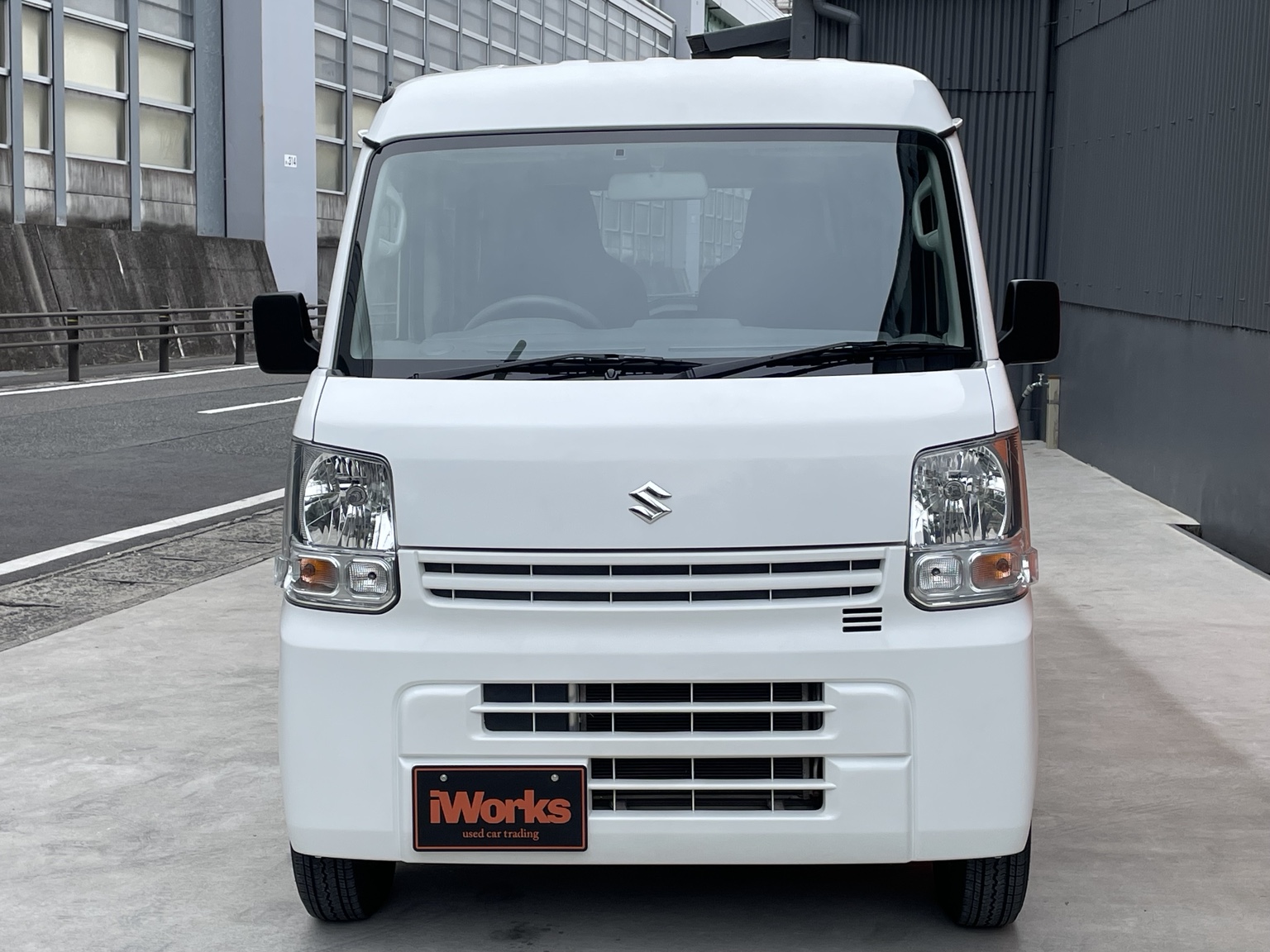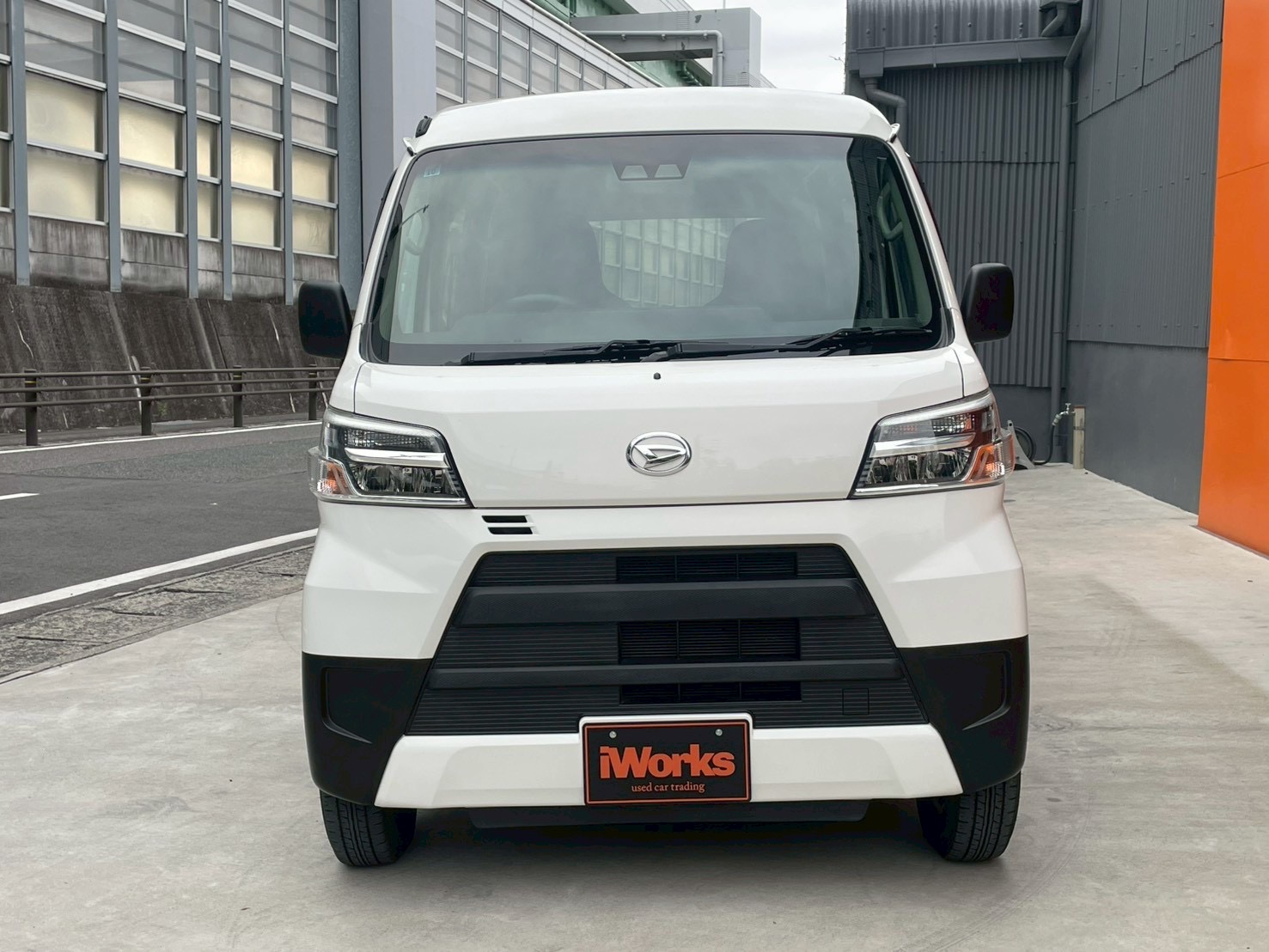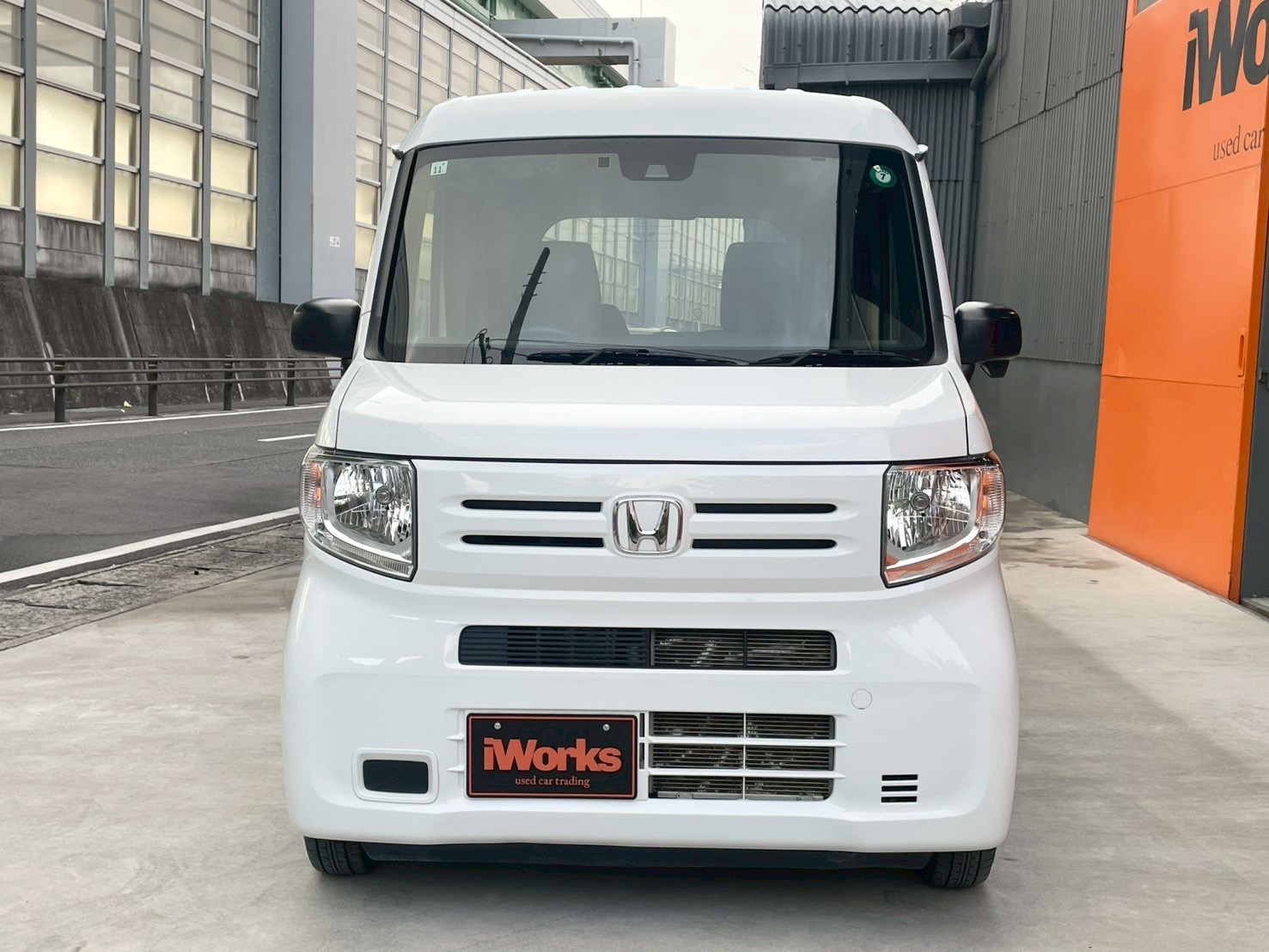
Choose a model to explore
A kei van should suit more than a familiar name or a large cargo compartment. Consider what you carry, how many people travel, the roads you use, the equipment you need and maintenance after purchase. These guides explain both the strengths and the points to check for three models.
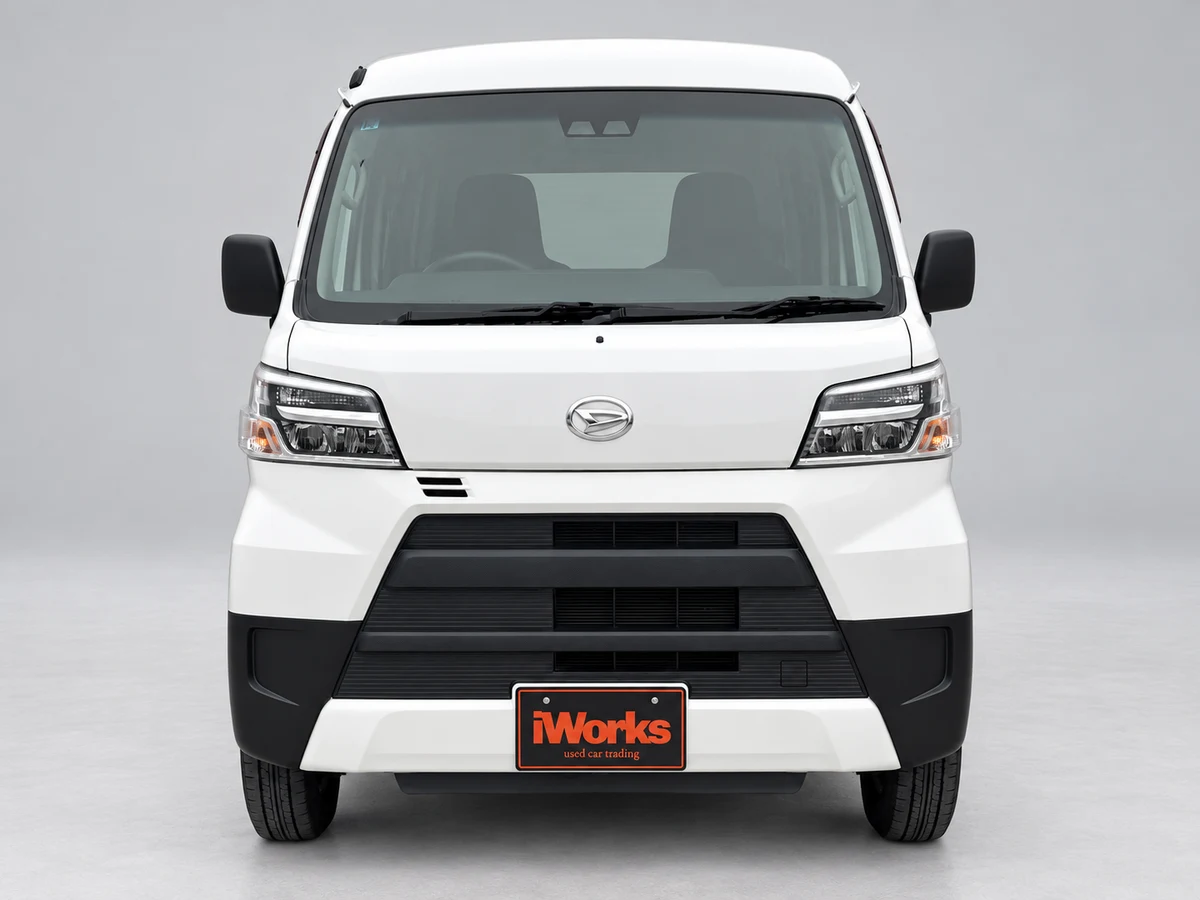
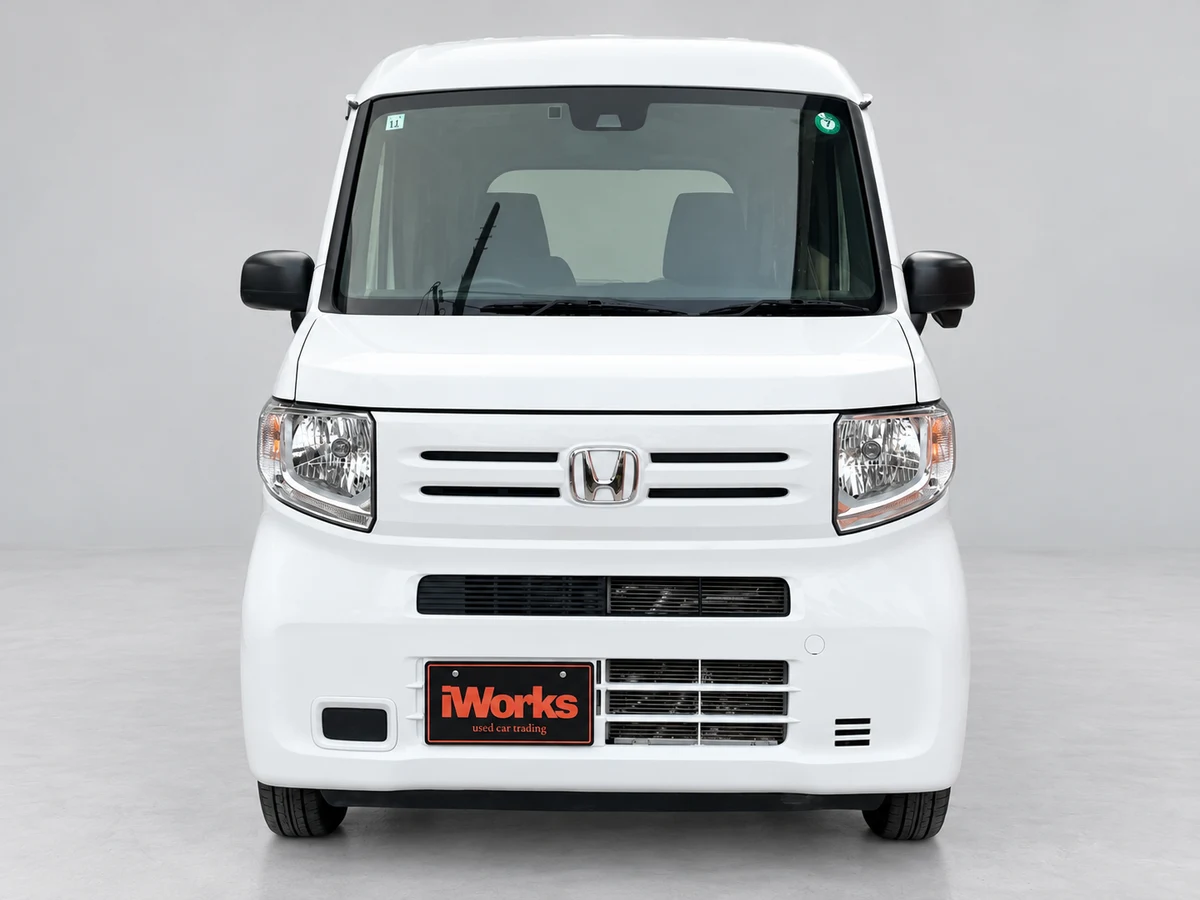
Photographs are examples of vehicles handled by iWorks, with edited backgrounds. Verify the actual model year, equipment and availability in the listing or at the dealership.
Start with how you will use it
| What to check | How to compare |
|---|---|
| Load size and weight | Check loading dimensions, access, securing points and the payload shown on the vehicle inspection certificate. |
| Number of occupants | Compare a driver using the maximum cargo space separately from trips with passengers. |
| Roads and distance | Match naturally aspirated or turbo engines, transmission and 2WD/4WD to your work. |
| Equipment and budget | Consider model-year and grade differences, the total purchase cost and future maintenance together. |
Every, Hijet Cargo or N-VAN?
Compare the same occupants, loads, model years and grades. Every and Hijet Cargo both offer practical cargo space for work. N-VAN is easier to assess when you also consider using its folded front passenger seat for loading. This comparison covers Every DA17V, mainly Hijet Cargo S321V/S331V of the S300 generation, and petrol N-VAN JJ1/JJ2. Assess the later Hijet S700V/S710V generation separately.
| Feature | Every DA17V | Hijet Cargo S300 | N-VAN petrol JJ1/JJ2 |
|---|---|---|---|
| Cargo layout | Check rear-seat specifications and folding arrangements, including PA/PC versus JOIN. | Compare standard/high roofs and grades such as Cruise with the tools or cases you carry. | Low floor and a large passenger-side opening; folding the passenger and rear seats extends the load space forward. |
| Carrying people | Check remaining cargo space with two front occupants and when using the rear seats. | Decide whether cargo or rear-seat passengers take priority; compare seat shape and equipment. | The folded passenger seat cannot be occupied. With two or more people, check the seats and remaining cargo area. |
| Transmission | 5MT, 5AGS, 4AT or CVT depending on year/specification. Do not rely on an “AT” label alone. | Distinguish S300 MT/AT from the S700 generation introduced in December 2021, including CVT. | CVT or 6MT; available combinations depend on year and grade. |
| Equipment | Compare PA, PC, JOIN and model-year changes. | Compare Special, Deluxe, Cruise and safety equipment. | Compare G, L and FUN variants, turbo availability and seat use. |
For all three, check the vehicle inspection certificate, model code, first registration date, service and structural repair history, cargo area, doors and required equipment. Compare payload and dimensions with matching drivetrain, passenger and grade conditions.
Bring the details of your usual load
List the dimensions and number of delivery cases or tools. Think about loading from the side or rear and the number of occupants. This makes the required equipment and cargo layout clearer.
Advice from sales and maintenance
We distinguish published manufacturer specifications from iWorks’ own assessment. We do not state unverified fault trends or market prices as facts. Ask us about an individual vehicle’s condition and its upkeep after purchase.
Find a van that fits your work
iWorks is a kei van specialist in Midori Ward, Nagoya. We can help you compare the Suzuki Every, Daihatsu Hijet Cargo and Honda N-VAN, with advice from both vehicle sales and our certified maintenance workshop. Some vehicles are not listed online. Tell us your budget, preferred model year, mileage, transmission, equipment and the loads you carry.
Browse our stock on Goo-net (Japanese) · Contact us on LINE · Call 052-602-7204
The stock link covers the whole dealership, not just this model. Check the individual listing or contact us for current availability.
iWorks REAL CAR GUIDE
Compare the three cargo areas in photographs.
How many people will travel? What will you carry?
Compare the same seat arrangements to find the space you need.
Camera positions and angles differ. Do not judge dimensions from apparent size alone. Look at floor shape, side intrusions and how the cargo area connects to the seats.
First identify the model
Below, compare its cargo area with each seat arrangement.
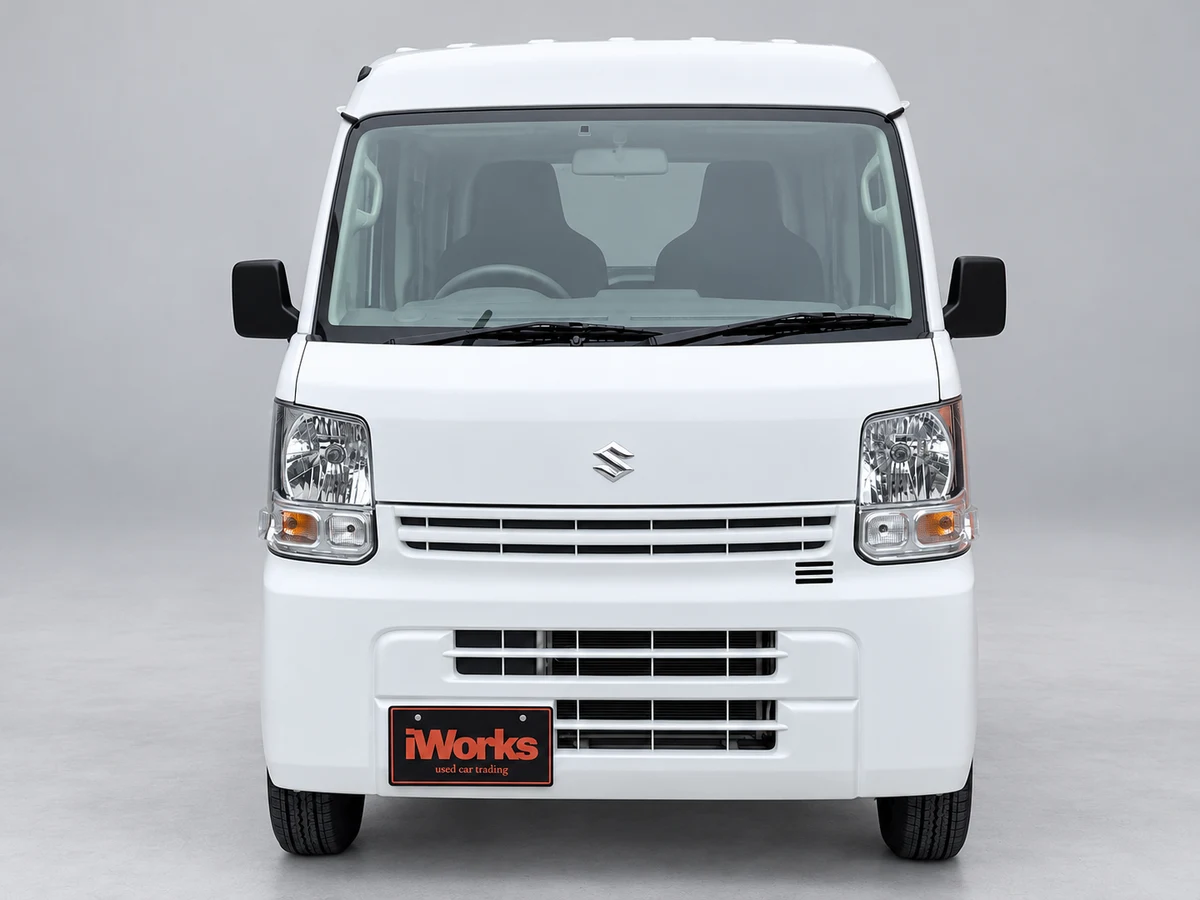 Enlarge photo +
An example of a vehicle handled by iWorks
Background and brightness adjusted for presentation
View the original photograph
 Enlarge photo +
An example of a vehicle handled by iWorks
Background and brightness adjusted for presentation
View the original photograph
 Enlarge photo +
An example of a vehicle handled by iWorks
Background and brightness adjusted for presentation
View the original photograph
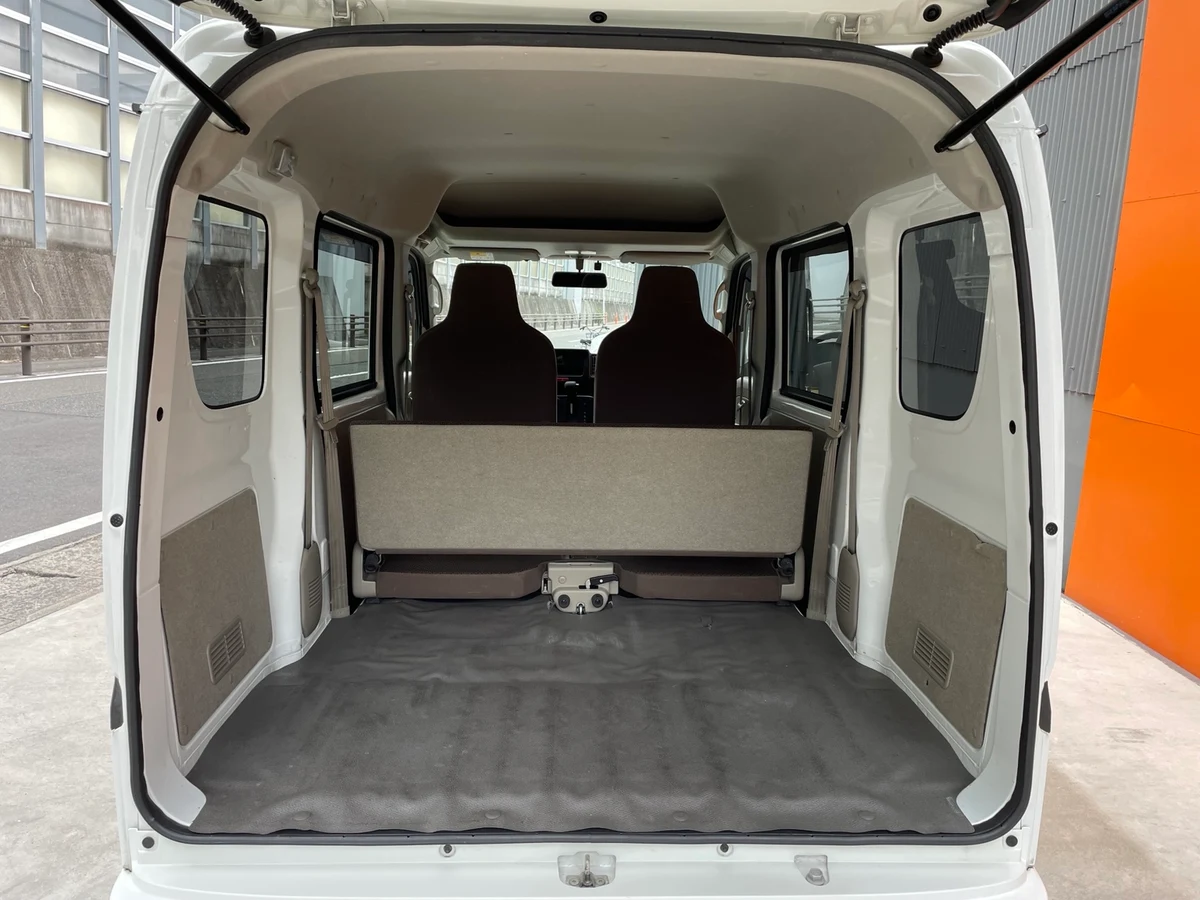
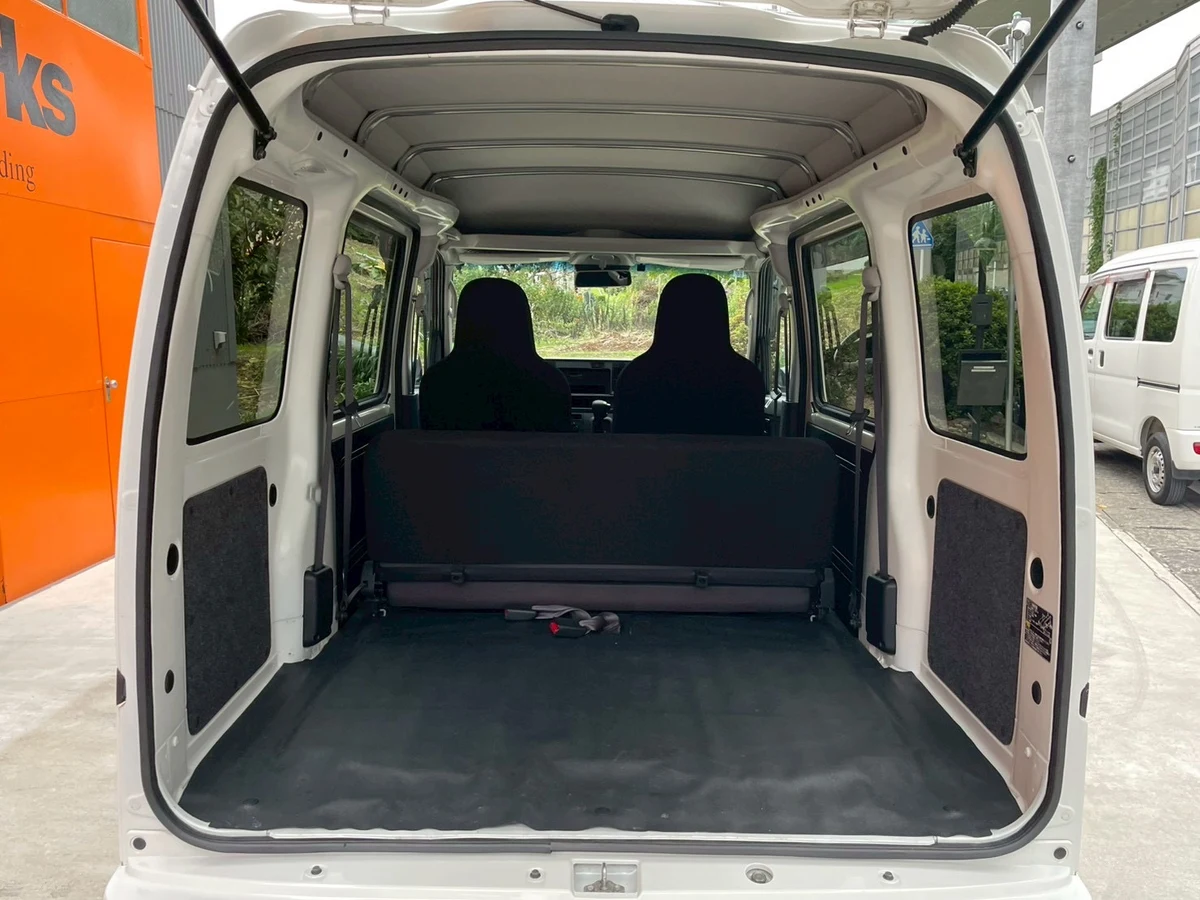
What remains with the rear seats in use?
Rear seats in use | Cargo space while carrying passengers
 Enlarge photo +
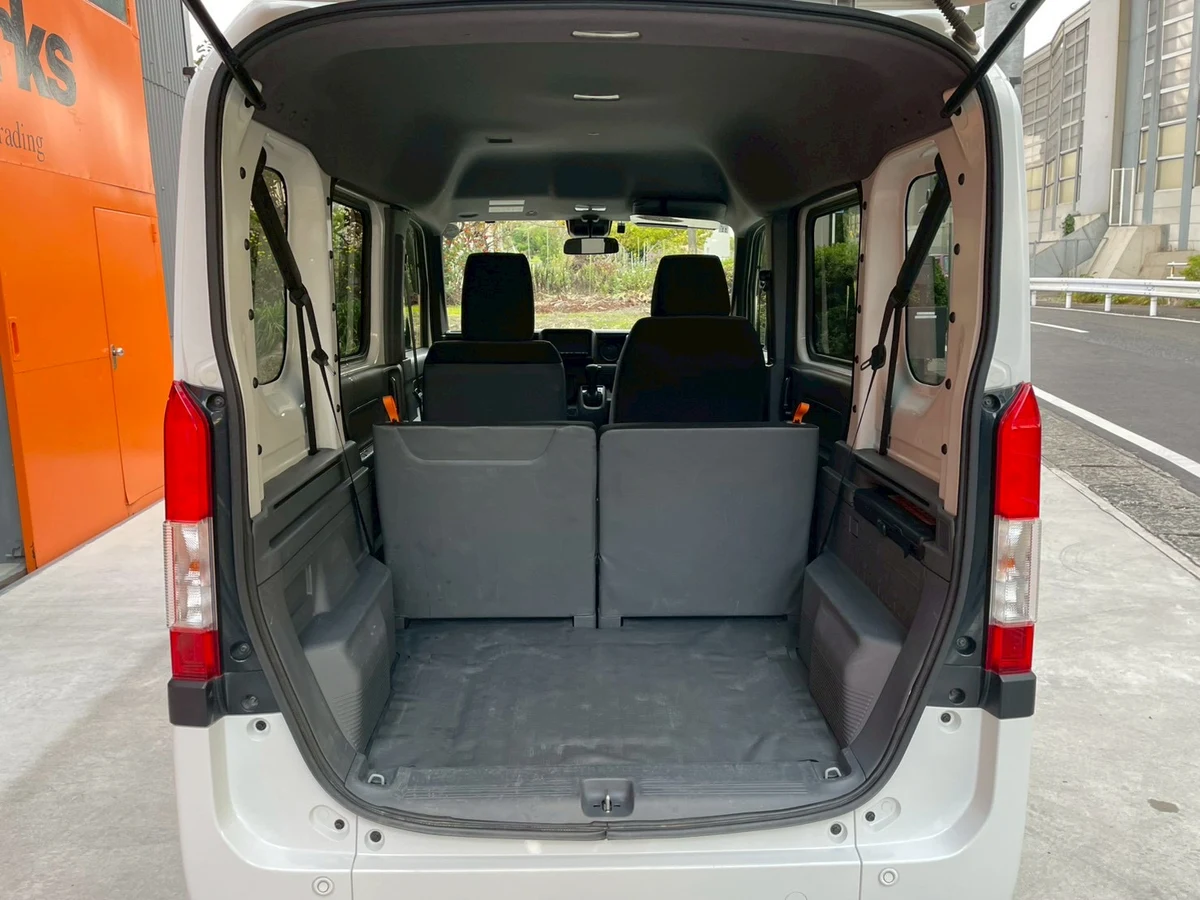
Check the depth remaining between the rear backrests and the cargo opening.
 Enlarge photo +
Check the floor and cargo opening when the rear seats are in use.
 Enlarge photo +
Both rear seats are upright. Check the space behind their backrests.
Look for the depth from the rear backrests to the cargo opening. Picture where your usual shopping bags or toolboxes would go.
Fold the rear seats for cargo
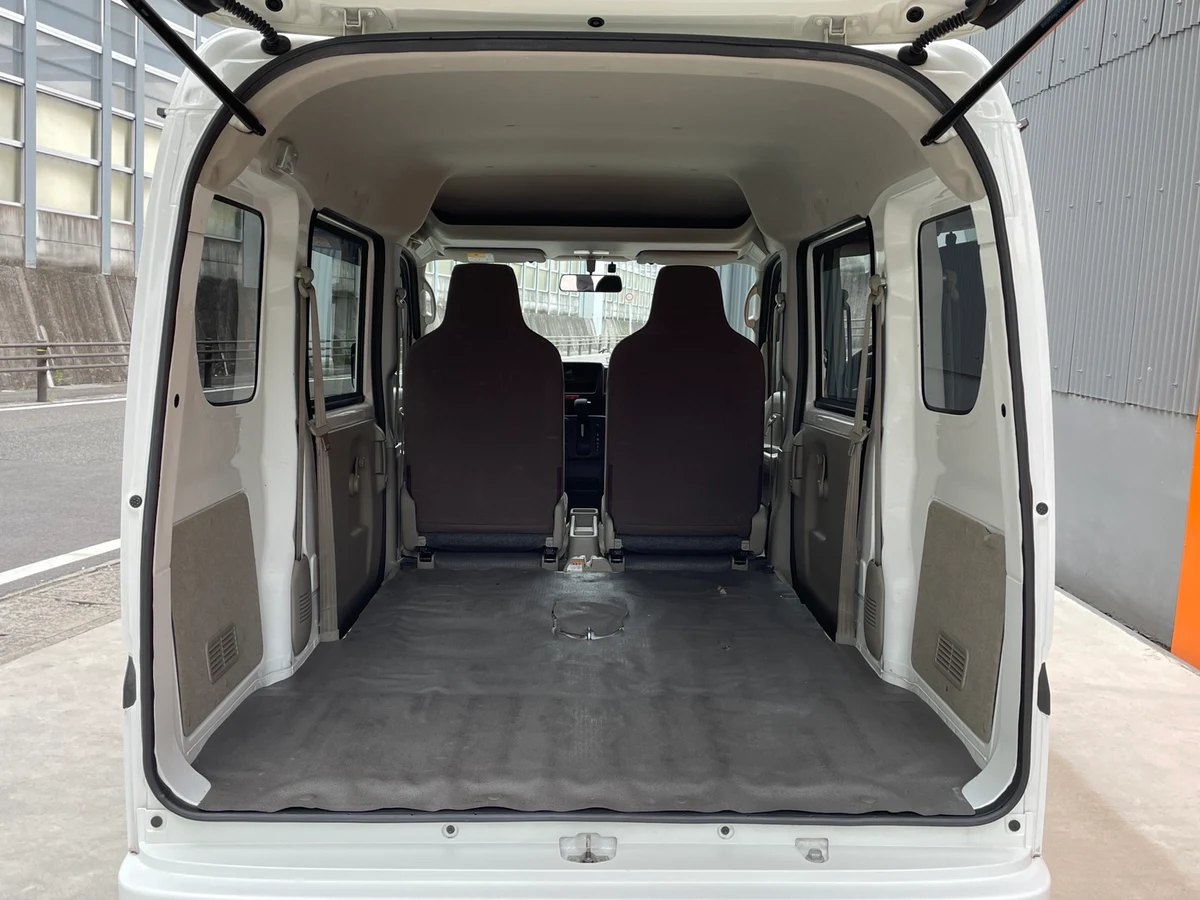
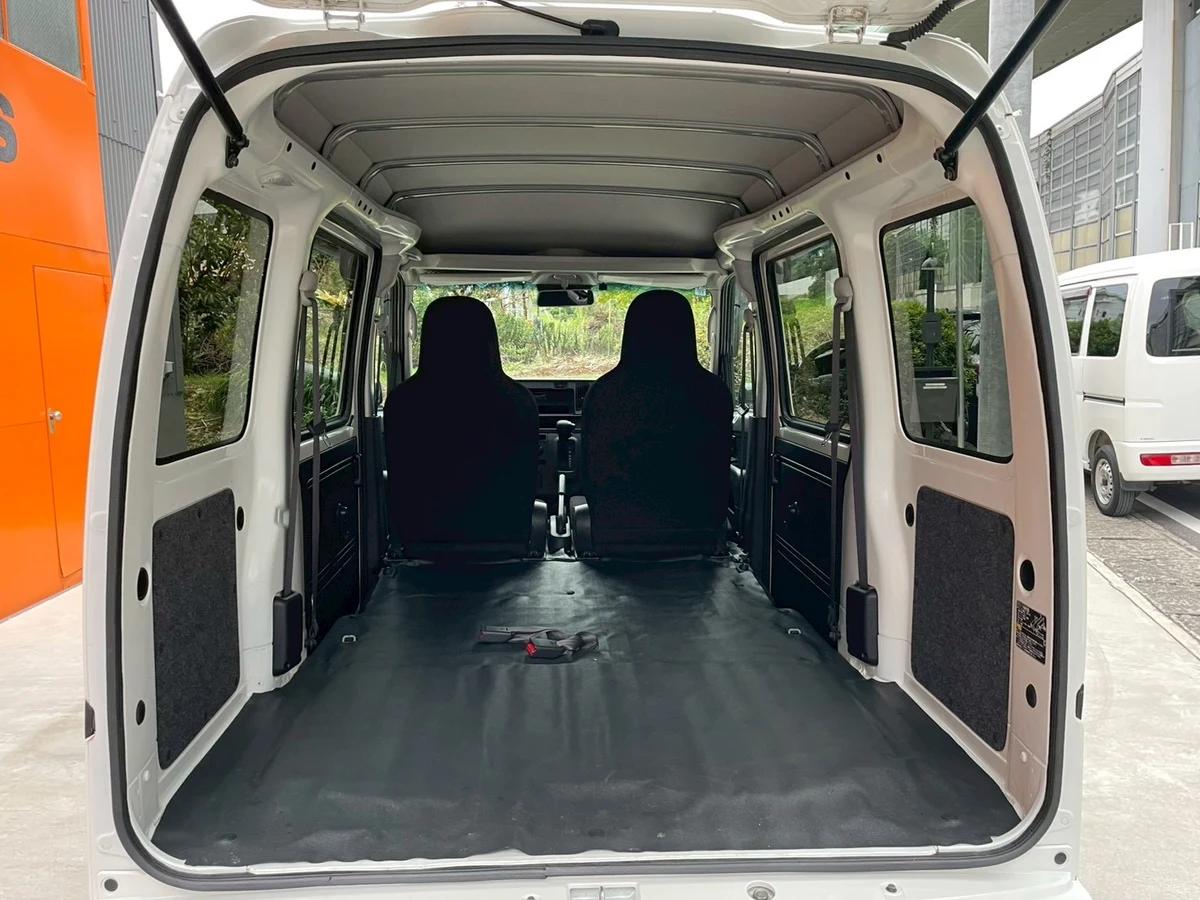
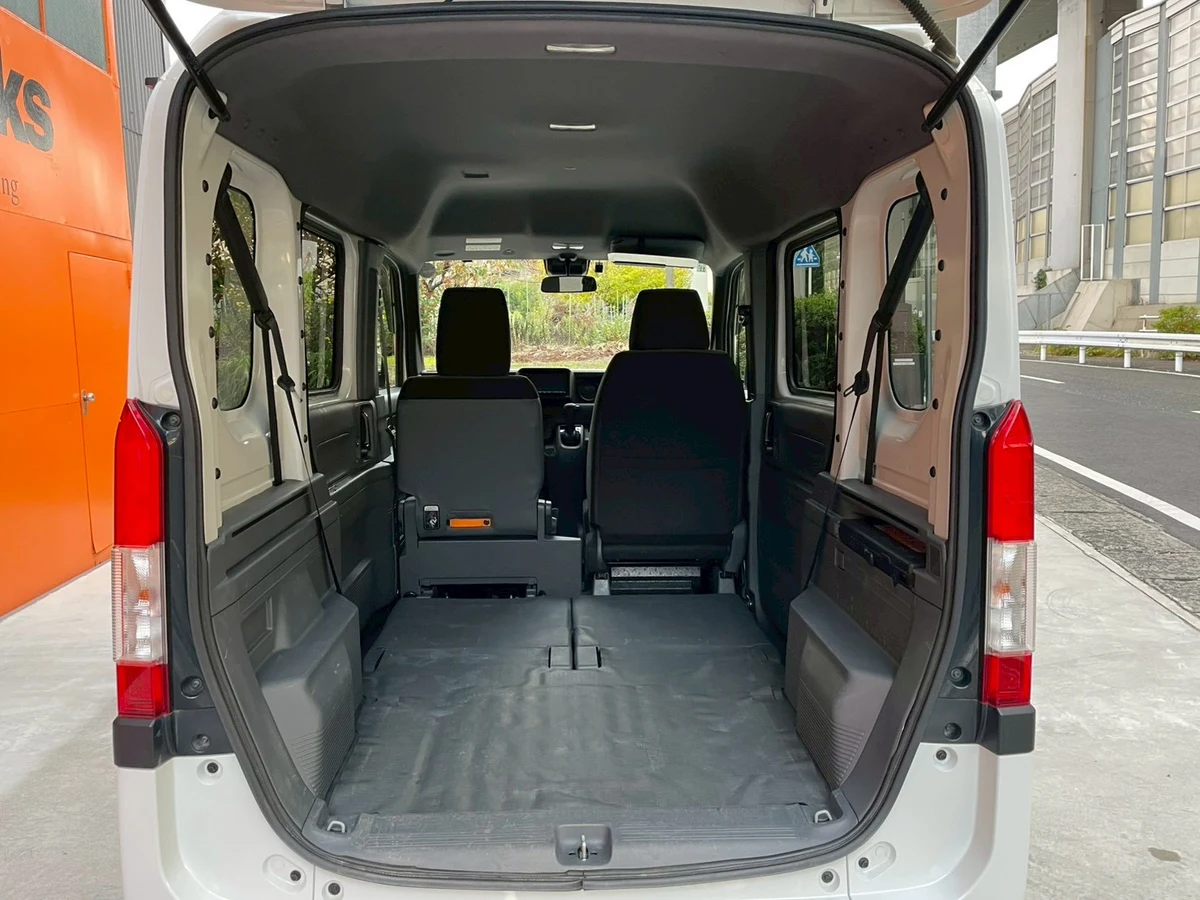
Rear seats folded · passenger seat available | Compare with both front seats usable
 Enlarge photo +
Check the side intrusions and the floor extending to the backs of the front seats.
 Enlarge photo +
Check the floor shape and how the folded rear-seat area joins the cargo floor.
 Enlarge photo +
The front passenger seat remains available. Check the floor behind both front seats.
Look for floor width, side intrusions, steps and the usable area behind the front seats.
N-VAN: use the passenger side for extra length
Passenger and rear seats folded | An additional arrangement for driver-only use
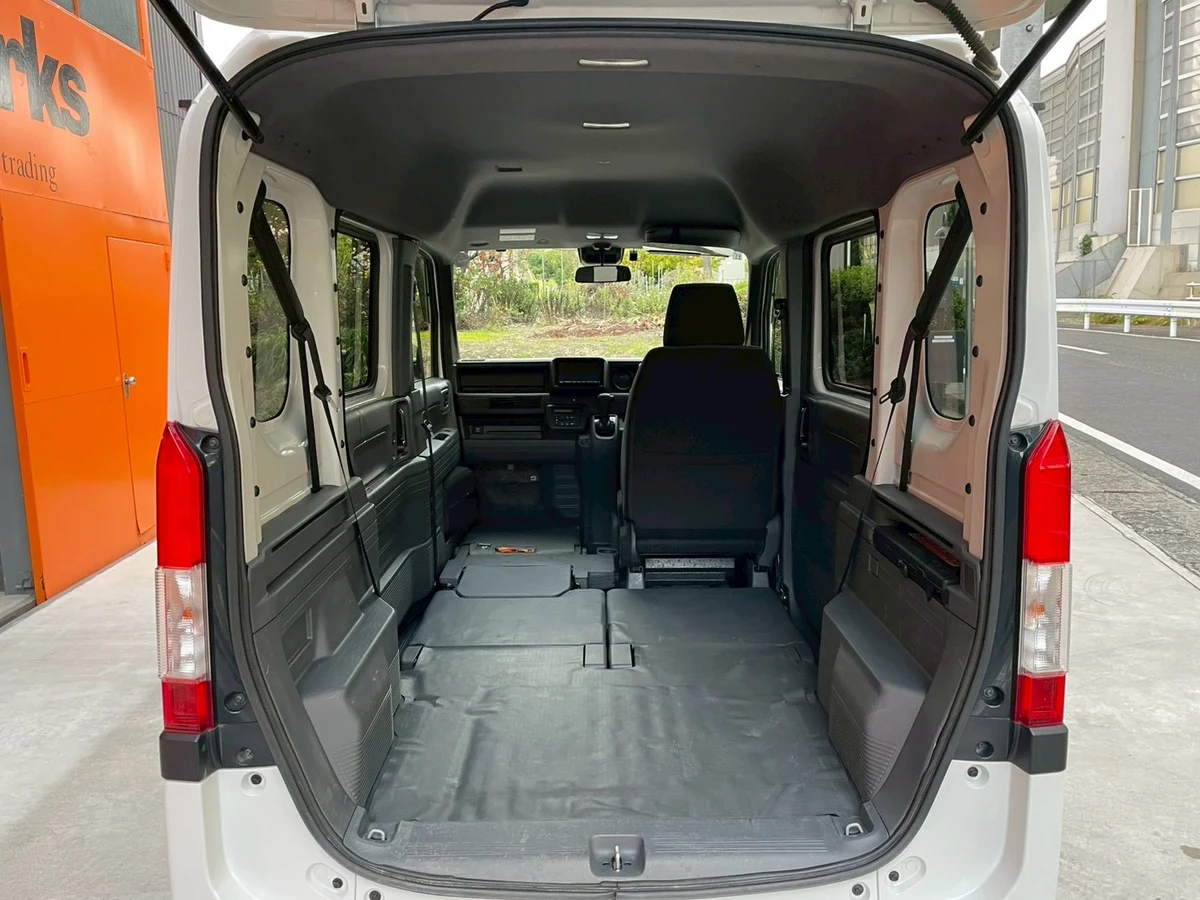 Enlarge photo +
Driver only. The load space extends along the front passenger side.
For long items,
check the passenger-side space.
This photograph has the front passenger seat folded as well as the rear seats. The number of occupants and the use of the cargo area differ from the two-front-seat comparison above.
If you carry stepladders or long tools, tell us their length, width and height so we can check whether they fit the actual vehicle.
Check fit using your load’s actual dimensions.
Cargo space and seat-folding arrangements vary by year, grade and equipment. On the candidate vehicle, check opening width and height, floor width and depth, and any steps.
Photographs: examples of vehicles handled by iWorks; not a guarantee of current stock. Exterior images have adjusted backgrounds or brightness, and original photographs are available. Cargo images are real photographs without alterations to shape, steps or seat layout.
SIZE & SPACE
Compare kei van dimensions in pictures and diagrams
Similar body sizes do not mean identical usable cargo space. Compare common used models with their specification and seat configuration clearly stated.
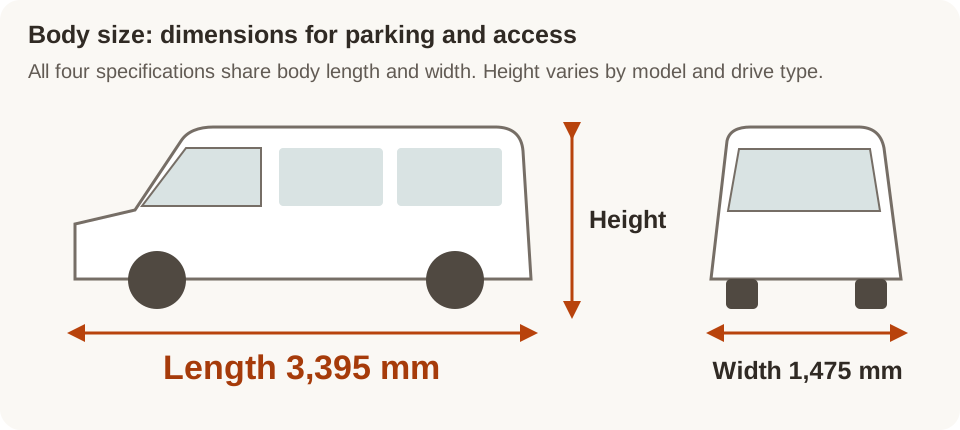
Body and cargo dimensions are shown separately. Cargo widths with four occupants and maximum lengths with the front passenger seat folded are not mixed into this comparison. Figures are published by the manufacturers, not measured by iWorks.
Two people and a stepladder
Check cargo length with the passenger seat available. Measure the folded ladder’s outside dimensions and compare the length and width needed to place it front-to-back.See the N-VAN seat configurations →
Does every Hijet have the same cargo space?
Distinguish the S300 and S700 generations, then check Deluxe versus Cruise. Cargo use can differ even under the same model name.Compare the generations →
The dimensions fit, but will the load go in?
A box that fits the cargo area may still not pass through the door. Checking the cargo area and opening separately helps prevent this problem.Checks before loading →
| Model and specification | Body height | Cargo length | Cargo width | Cargo height |
|---|---|---|---|---|
| Every DA17VPC / high roof / 2WD February 2015 launch specification | 1,895 | 1,910 | 1,320 | 1,240 |
| Hijet Cargo S321V / later S300 seriesDeluxe SA III / high roof / 2WD 2020 specification sheet (archived January 2021) | 1,875 | 1,860 | 1,315 | 1,235 |
| Hijet Cargo S700V / S700 seriesDeluxe / 2WD Early specification of the generation launched December 2021 (archived January 2023) | 1,890 | 1,915 | 1,270 | 1,250 |
| N-VAN JJ1L Honda SENSING / FF / high roof Model introduced July 2018, discontinued January 2021 | 1,945 | 1,510 (left) 1,330 (right) | 1,235 | 1,365 |
All four specifications are 3,395 mm long and 1,475 mm wide. On the N-VAN, left is the passenger side and right is the driver side. These representative figures apply only to the stated years, grades and seat conditions.
DA17V
Every
PC / high roof / 2WD
February 2015 launch specification
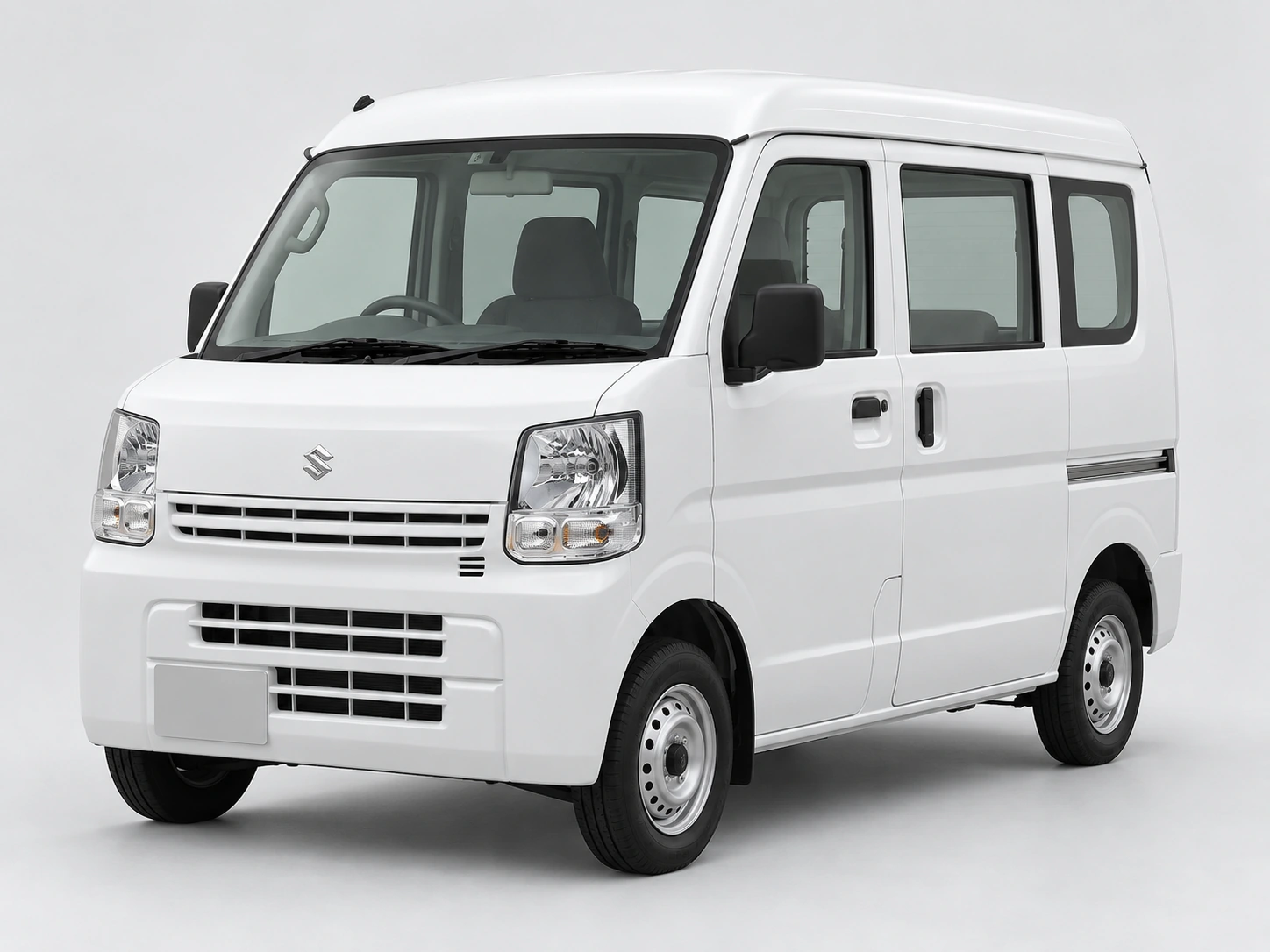
Original photographed 13 March 2015. Photograph:Tokumeigakarinoaoshima / Wikimedia Commons original / CC0 1.0. Background, framing and lighting adjusted with AI; display items and signs removed. Use the tables and diagrams for dimensions.
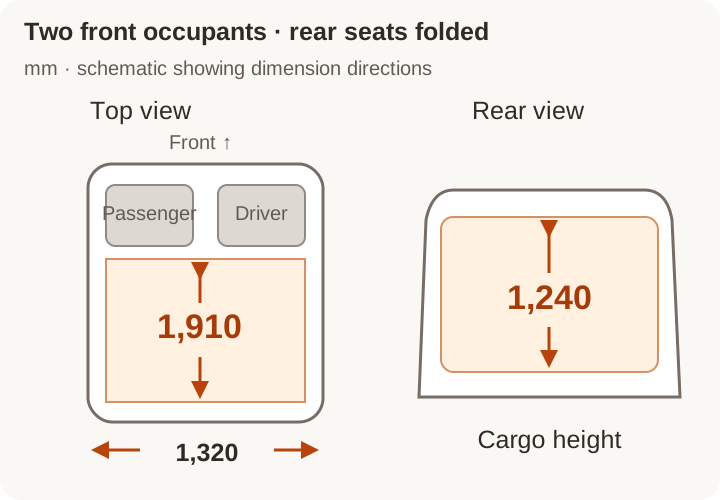
Cargo dimensions: two front occupants, rear seats folded / mm
- Cargo length
- 1,910
- Cargo width
- 1,320
- Cargo height
- 1,240
Body length × width × height:3,395 × 1,475 × 1,895 mm
For carrying cargo with two people, use the 1,910 mm cargo length as an initial guide to arranging boxes and tools.
These figures are for the PC at its 2015 launch. The JOIN of the same year has a cargo length of 1,820 mm and width of 1,280 mm. Rear seats also changed on later PC models, so the DA17V model code alone does not establish identical dimensions.
The 1,385 mm cargo-width figure is for four-person use. Here, the shared condition is two front occupants and rear seats folded, with a width of 1,320 mm.
Dimension sources (Japanese):Suzuki: Every specifications, February 2015
Suzuki: PC / PA rear-seat improvements, May 2017
S321V / later S300 series
Hijet Cargo
Deluxe SA III / high roof / 2WD
2020 specification sheet (archived January 2021)
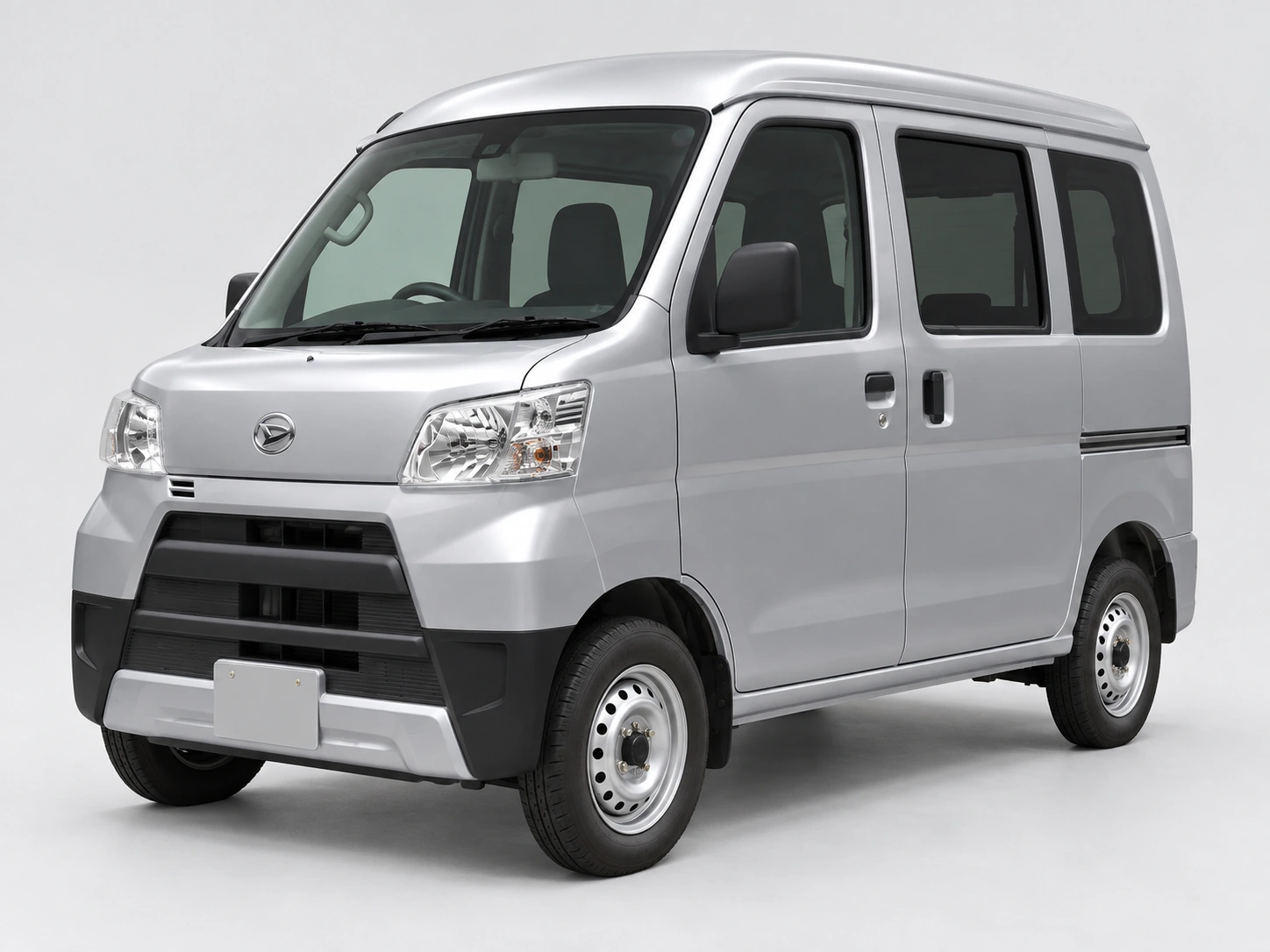
Original photographed 14 November 2017. Photograph:Tokumeigakarinoaoshima / Wikimedia Commons original / CC BY-SA 4.0. Background, framing and lighting adjusted with AI; display items and signs removed. Use the tables and diagrams for dimensions.
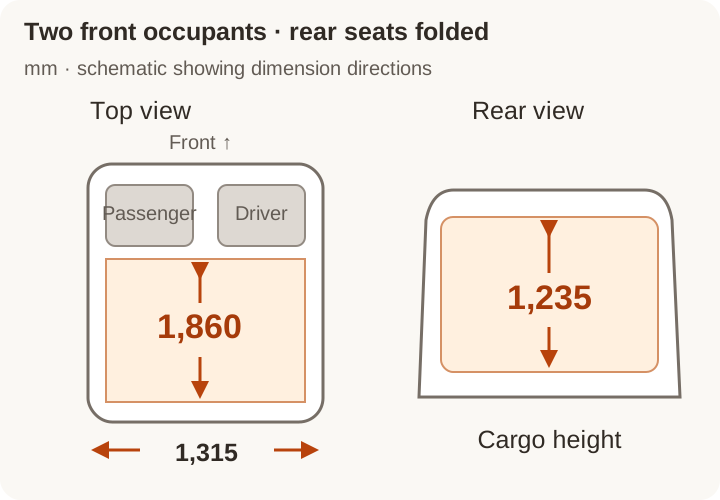
Cargo dimensions: two front occupants, rear seats folded / mm
- Cargo length
- 1,860
- Cargo width
- 1,315
- Cargo height
- 1,235
Body length × width × height:3,395 × 1,475 × 1,875 mm
When looking for a lower-budget used vehicle, compare the 1,860 mm cargo length directly with the width and height of your load.
Within the S300 series, standard-roof and Cruise versions have different cargo dimensions. This example is the high-roof Deluxe SA III.
The source photograph shows the later model photographed in 2017. The dimensions are for the 2020 specification; lighting and other equipment may differ from the pictured vehicle.
Dimension sources (Japanese):Daihatsu: S300 specifications (archived 16 January 2021)
Daihatsu U-CATCH: August 2020 Deluxe SA III 2WD
S700V / S700 series
Hijet Cargo
Deluxe / 2WD
Early specification of the generation launched December 2021 (archived January 2023)
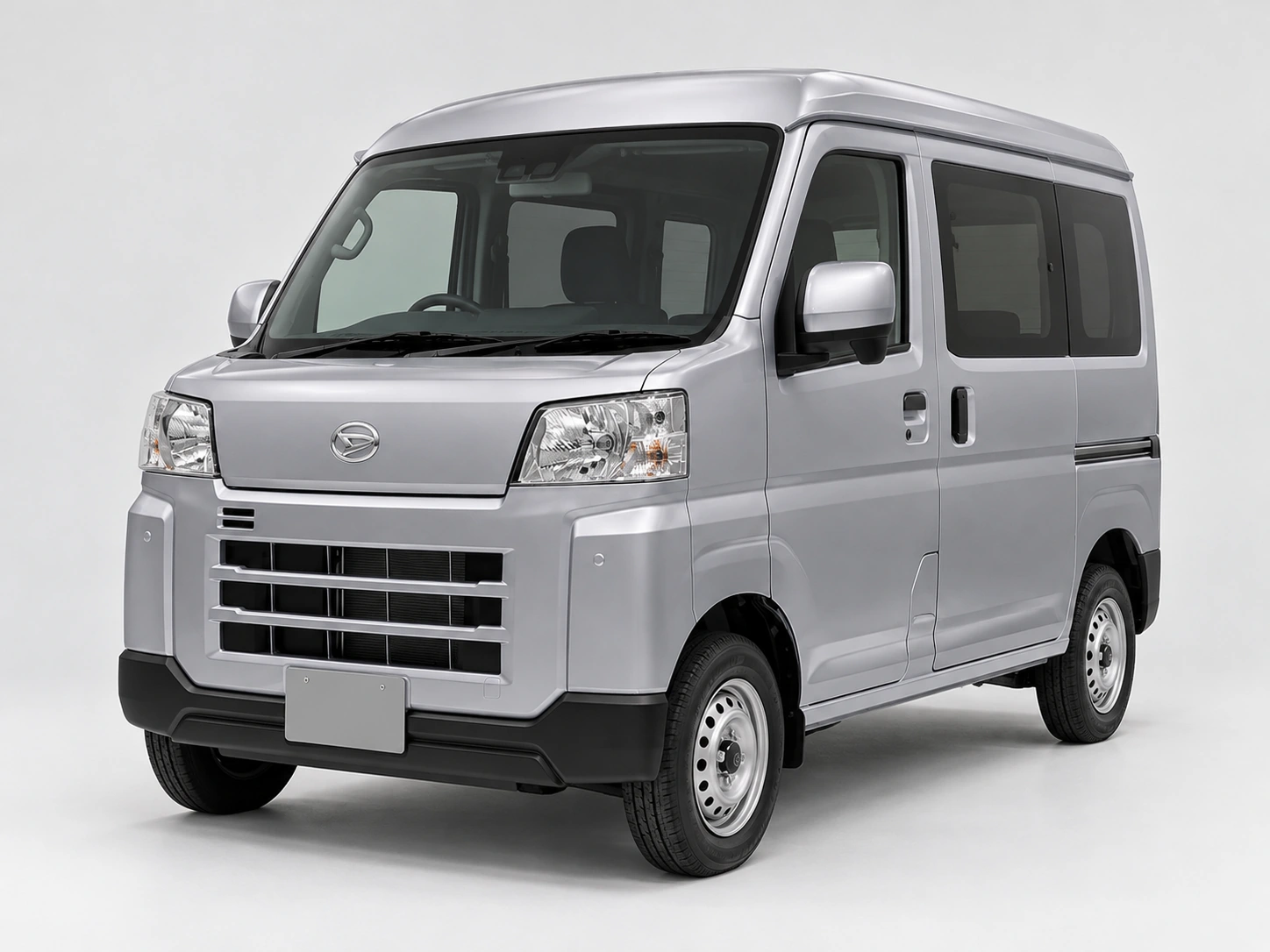
Original photographed 4 March 2022. Photograph:Tokumeigakarinoaoshima / Wikimedia Commons original / CC BY-SA 4.0. Background, framing and lighting adjusted with AI; display items and signs removed. Use the tables and diagrams for dimensions.
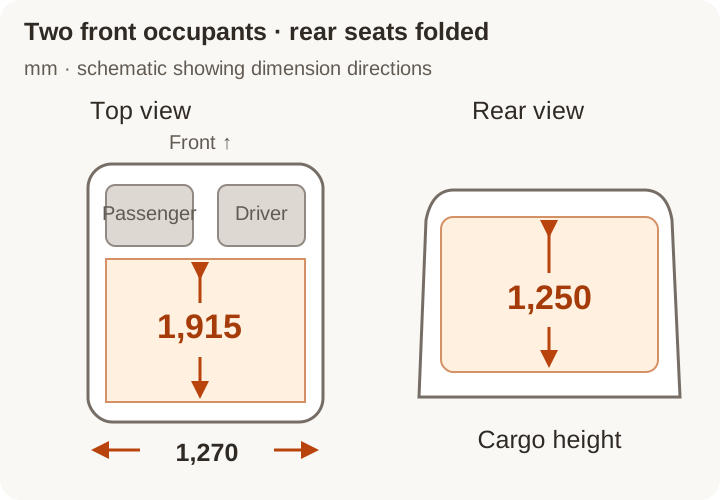
Cargo dimensions: two front occupants, rear seats folded / mm
- Cargo length
- 1,915
- Cargo width
- 1,270
- Cargo height
- 1,250
Body length × width × height:3,395 × 1,475 × 1,890 mm
For these representative specifications, cargo length is 55 mm greater and cargo height 15 mm greater than in the S300 Deluxe. This helps compare box stacking and arrangements for long tools.
The same specification sheet lists Cruise / Cruise Turbo cargo dimensions of 1,820 mm long, 1,265 mm wide and 1,225 mm high. Do not apply the 1,915 mm length to every S700V grade.
The often-quoted 1,410 mm cargo width is for four-person use. Keep its measurement condition separate from the 1,270 mm specification for two-person use.
Dimension sources (Japanese):Daihatsu: S700 specifications (archived 25 January 2023)
Daihatsu: full model change, December 2021
JJ1
N-VAN
L Honda SENSING / FF / high roof
Model introduced July 2018, discontinued January 2021
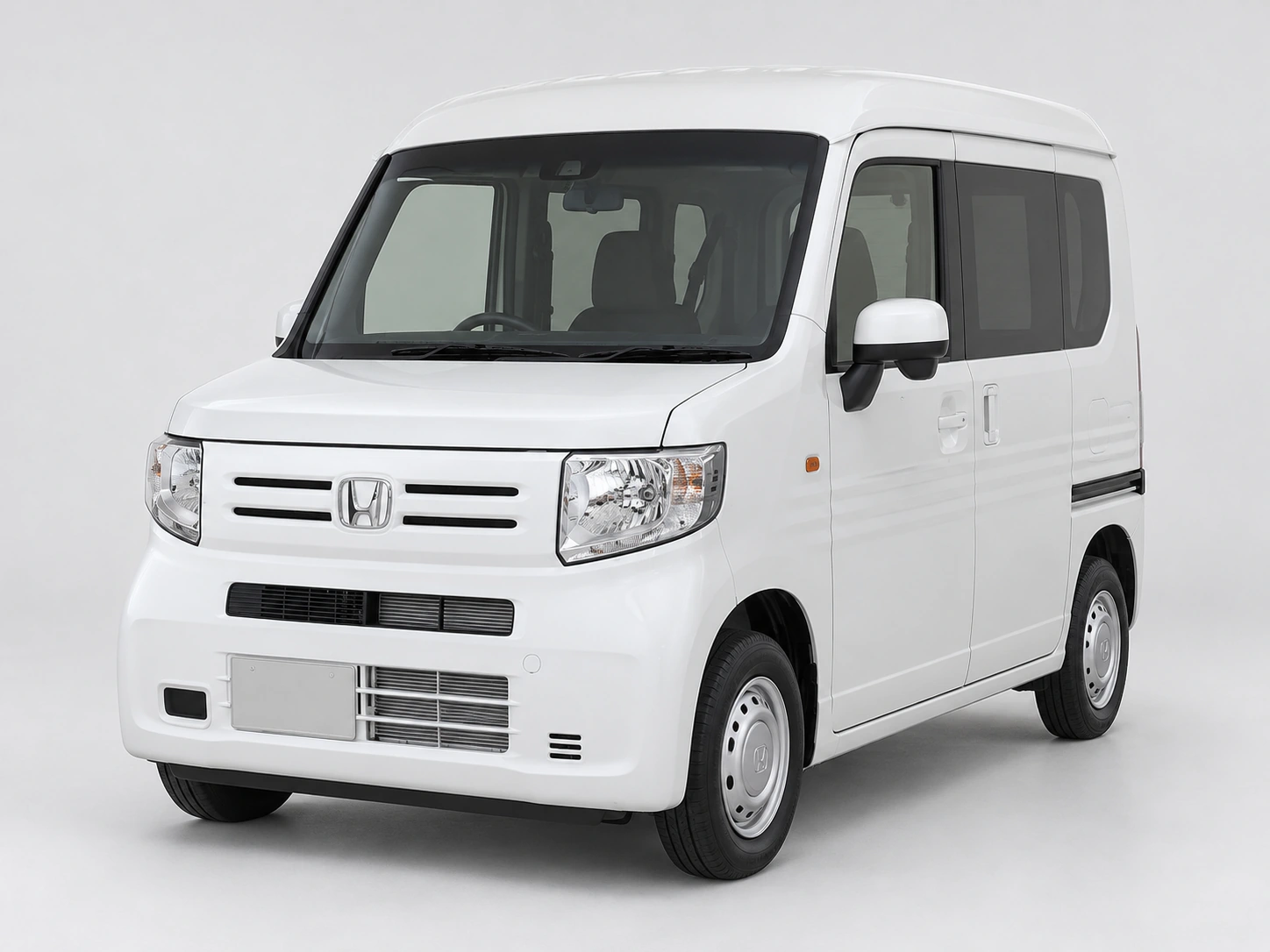
Original photographed 27 July 2018. Photograph:Tokumeigakarinoaoshima / Wikimedia Commons original / CC BY-SA 4.0. Background, framing and lighting adjusted with AI; display items and signs removed. Use the tables and diagrams for dimensions.
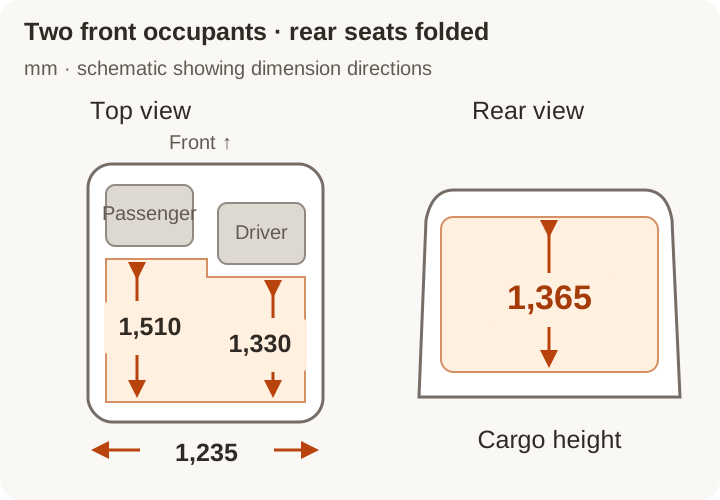
Cargo dimensions: two front occupants, rear seats folded / mm
- Cargo length
- 1,510Passenger side / driver side: 1,330
- Cargo width
- 1,235
- Cargo height
- 1,365
Body length × width × height:3,395 × 1,475 × 1,945 mm
With two occupants, cargo length is 1,510 mm on the passenger side and 1,330 mm on the driver side. If a 1,365 mm cargo height and low floor suit your work, also check loading and unloading with your actual cargo.
The maximum space length of 2,635 mm, with the passenger seat also folded, is a driver-only measurement on the passenger side. It is a different condition from the cargo length with two occupants.
The 1,945 mm body height shown is for FF high-roof versions. The 4WD height is 1,960 mm; the period’s +STYLE COOL has a low roof and different cargo dimensions.
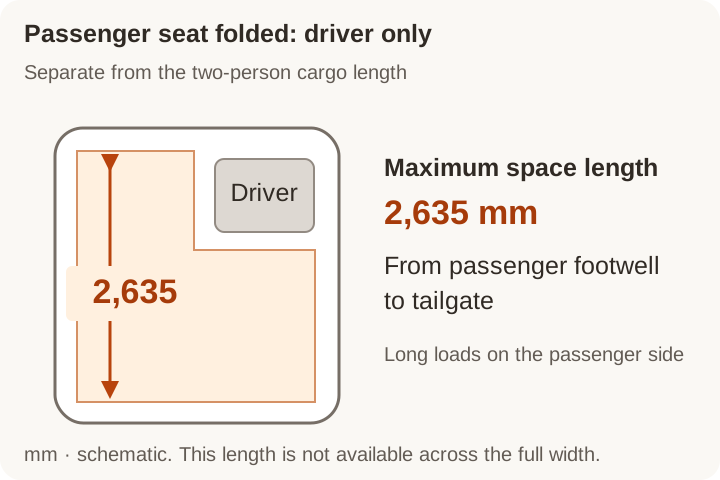
The 2,635 mm figure is Honda’s measurement from the passenger footwell to the tailgate. Check load width and thickness, and any interference with the driving seat.
Dimension sources (Japanese):Honda: specifications for the model introduced in 2018
Honda: cargo area and storage, model introduced in 2018
Cargo length, width and height are measurements in each direction from the specification sheet. The same width and height are not available everywhere, and measurement points differ between models. Check floor length, openings and the narrowest points separately.
Sources and images checked: 28 October 2026. Exterior images illustrate the models. Manufacturer photographs and dimension drawings have not been reproduced; the explanatory diagrams were created from published figures. Archived copies of the original manufacturer PDFs were also used for older specifications.
iWorks / PRACTICAL BUYING GUIDE
What matters most when choosing a kei van?
Compare maintenance access, driving and everyday use
Cargo capacity, passenger comfort and ease of maintenance.
Narrow your choice around what your daily work requires.
Models: Every DA17V / Hijet Cargo S321V, S331V, S700V, S710V / N-VAN JJ1, JJ2
Petrol models compared. Sources checked: 29 October 2026.
Start by ruling out configurations that cannot do your job.If two people sometimes travel together, folding the passenger seat to fit your load may not work. A fixed cargo floor can also block access to the battery. Catalogue figures alone can miss these practical problems.
The guidance below is based on manufacturer-published structures and specifications. Ride comfort and repair costs also depend on year, equipment, tyres, cargo and maintenance condition. This is not a ranking based on measurements under identical conditions.
1. Decide what matters most and what you can accept
On a phone, swipe the tables sideways.
| Your priority | Candidates to compare | Practical benefit | What to check or compromise on |
|---|---|---|---|
| Two people travelling to jobs with tools | Every DA17V Both Hijet generations | Use the rear cargo space while keeping the front passenger seat available. | Check that your usual boxes and stepladder fit with both front seats in use. Check front legroom and seating positions too. |
| Easier loading and unloading when working alone | N-VAN JJ1 / JJ2 | Make use of the low floor and wide opening on the passenger side.[9] | The length obtained by folding the front passenger seat is unavailable when two people travel. Check the cargo space with both front seats in use separately. |
| Long hours at the wheel or motorway travel | N-VAN CVT / turbo S700-series CVT DA17V CVT / turbo | Compare shift smoothness, uphill performance, the driving seat and driver assistance equipment.[7][8][9] | Do not judge comfort by model name alone. Alongside the total purchase price, check turbo oil-maintenance requirements and the equipment of each vehicle. |
| A lower total purchase price | Earlier Hijet models DA17V across a wider range of years and specifications | Look across different years and conditions within the same budget. | Even for a low-priced vehicle, include immediate cooling-system, air-conditioning, tyre and other maintenance costs. This is not a price ranking of the models. |
| Installing a fixed floor or shelves | Check maintenance access on every model | Build storage around the equipment you carry. | Leave access to the DA17V battery beneath the cargo floor. In a Hijet, allow room to lift the front seat. In an N-VAN, do not obstruct seat folding. |
| Passenger comfort | Compare each model’s front passenger and rear seats | Choose around the posture, legroom and comfort of the people who will actually travel. | Do not assume the front passenger and rear seats feel like the driving seat. For frequent long journeys with four people, also compare kei passenger cars. |
The N-VAN’s long-load space is useful, but the configuration changes when a passenger travels. Compare all models with two front occupants and rear seats folded; treat folding the passenger seat as an additional arrangement.
2. Compare driving and comfort by transmission and seat
EVERY / DA17V
First distinguish 5AGS, 4AT, CVT and 5MT
The DA17V model code covers different transmissions. The 5AGS automates clutch and gear operation, so its acceleration and shifts feel different from a 4AT or CVT. Identify the actual transmission rather than relying on an “automatic” listing.
CVT versions were added in February 2024, but the PA continued to offer 4AT at that time. A used vehicle’s year alone does not establish that it has a CVT.[1][7]
How to choose:Narrow your choices by transmission preference and maintenance history while checking the cargo space you need. An AGS recall must not be treated as a problem affecting all 4AT and CVT vehicles.
HIJET CARGO / S321V / S331V
Consider generation and condition, then spend on the specification you need
Check whether the vehicle has 5MT, AT or another specification, and confirm equipment for its year. Compare the earlier 4AT separately from the newer generation’s CVT. On older vehicles, also check tyres, suspension and engine mounts, rather than focusing only on transmission type.
How to choose:When looking for a lower-priced vehicle, compare the total payable after delivery preparation. If quietness matters, check whether a newer CVT model fits your budget.[8]
HIJET CARGO / S700V / S710V
CVT driving with space for work equipment
The December 2021 generation change introduced a CVT for the front-engine, rear-wheel-drive layout. Daihatsu describes improvements in take-off performance and quietness over the previous model. A 5MT version also exists, so not every S700-series vehicle is a CVT.[8]
How to choose:A candidate for those who need a box-shaped cargo area and want to consider the effort of daily travel. Compare its price with earlier models using current stock of similar condition and specification.
N-VAN / JJ1 / JJ2
For those who prioritise the driving seat and loading access
Features include a low floor and a driving seat designed with long hours in mind. The front passenger seat, however, is designed to fold into the cargo area. Check driver comfort and passenger comfort separately.[9]
How to choose:Consider it for long solo use, frequent stops or side loading. For two-person use, check the passenger seat while seated as well as the available cargo space. Honda SENSING and other features vary by year and specification.
If you often climb hills with cargo or join motorways, turbo versions are worth comparing. Naturally aspirated versions are also candidates for mainly short trips. For a turbo, check the specified oil-change conditions and service history alongside the price. Fuel consumption and annual running costs cannot be fixed at one figure for every use.[1]
Comfort checks include driving posture, the passenger seat cushion and backrest, legroom, tyre brand and pressure, and suspension inspection results. iWorks does not offer test drives. Tell us your routes and loads, and compare stationary seating checks with the specification and maintenance explanation.
3. What battery access tells you about maintenance
The same type of replacement part can require different access work.If you leave cargo loaded or install a floor panel, consider what must be moved before replacement can begin.
Under cargo floor
NA: under passenger seat / turbo: under driver seat
Under passenger seat
Under bonnet
These diagrams explain relative positions; they are not vehicle photographs or dimension drawings. The left/right difference in the earlier Hijet was cross-checked against manufacturer information for OEM versions and repair records. Confirm accessories and modifications on the actual vehicle.[1][2][3][4][5]
View battery replacement photographs (external websites)
Workshop photographs show the floor or seats opened for access. Each is an example for a particular vehicle and year.
- Every DA17V: replacement beneath the cargo floor (AUTO SHOP Kizuna)
- Earlier Hijet S321V: driver-side replacement (Masuda Motors). This is not an example of the naturally aspirated model’s layout.
- S700V: replacement under the passenger seat (Taiyakan Sotobo). These reference photographs show an Atrai of the same generation.
- N-VAN: replacement under the bonnet (Vasques Corporation)
| Model | Work needed for access | Practical implications |
|---|---|---|
| Every DA17V | Move cargo from the work area → lift the floor cover → remove the battery plate → access the terminals and retaining bracket. The 2015 manual’s example has 4 clips and 2 plate screws.[1] | If a fixed floor has no inspection opening, removing the floor or shelves adds work. Whether all cargo must be unloaded depends on the layout. |
| Hijet S321V / S331V NA (non-turbo) | Move items around the passenger seat → fold the backrest forwards → release the seat fastenings → lift the cushion and inspection cover.[2][3] | Check that items on the passenger seat or shelves behind it do not obstruct lifting the seat. |
| Hijet S321V / S331V Turbo | Open the inspection cover in the same way on the driver’s side. Do not confuse this with the naturally aspirated model’s passenger-side access.[2][3][25] | Seat covers and aftermarket consoles can also obstruct opening and closing the inspection cover. |
| Hijet S700V / S710V | Operate the passenger backrest and retaining catches to open the inspection cover beneath the front seat. Check how it is supported for the specific model year.[4] | Lifting the cargo floor is normally unnecessary, but leave room to raise the passenger seat. |
| N-VAN JJ1 / JJ2 | Open and securely support the bonnet → access the battery terminals and retaining bracket in the engine compartment.[5][6] | Normally, neither cargo nor front seats need to be moved. Avoid damaging the current sensor or wiring, and choose a battery suitable for the specification. |
Replacement involves checks beyond reaching the battery
The following isan overview for comparing the work involved. It is not a workshop procedure covering tightening torques or initialisation. Work must follow the vehicle’s owner’s manual and service information.
- Confirm compatibility and safety.Check the year, model code and whether idle stop is fitted. Park, stop the engine, switch power off and prepare to avoid flames or short circuits caused by tools. The 2015 DA17V manual instructs users to wait at least 30 minutes after driving before working.
- Open the work area as described above.Check whether cargo, floor panels or seat covers must be removed. Follow vehicle and equipment instructions for any memory backup.
- Remove terminals and retaining hardware.Disconnect the negative terminal first, then the positive. Do not bridge the terminals, or the positive terminal and body, with a tool. Remove the retaining hardware and lift the battery out without excessive tilting.
- Secure and connect a compatible battery.Match dimensions, terminal orientation, performance and application. Connect positive first, then negative. Check terminal covers, wiring and secure mounting.
- Reassemble and check operation.Check whether initial settings or learning procedures are required for the model and year. Check starting, warning displays, clock and windows, then restore the plate, floor and seats and confirm they are locked.
Battery part numbers, tool sizes and work times are not universal. Using a backup does not guarantee that initialisation is unnecessary. Jump starting is a separate procedure; consult the vehicle’s owner’s manual for booster cable connections.[1][4][5][6]
On a DA17V, leave an opening that allows the battery plate to be removed. On a Hijet, allow the seat to lift. Even with an opening, heavy toolboxes permanently covering it will need to be moved for replacement.
4. Access for other maintenance also depends on the job
| Work area | Every / Hijet | N-VAN | How this helps your choice |
|---|---|---|---|
| Inspection above the engine | Mainly through inspection covers beneath the front seats. Some work also requires access from beneath the vehicle. | Through the front engine compartment. Certain parts require removal of surrounding components or access from below. | A bonnet does not mean every repair is cheaper. Consider separately the cargo that must be moved and the work being done. |
| Oil and coolant | Check leak traces, levels, replacement history and service requirements for the intended use. | Likewise, check history, leaks and specified fluids. | Tell the workshop about long-distance driving, frequent stop-start use and other operating conditions. |
| Transmission maintenance | MT, AGS, AT and CVT differ in construction and fluid requirements. | CVT and 6MT have different specified fluids and service conditions. | Do not prescribe the same oil or a universal change interval by model name alone. Use service records and year-specific maintenance information. |
| Consumable parts and warranty | Check the present condition of tyres, brakes, belts, battery and other consumables. | Likewise, check wear and warranty coverage. | Compare parts, labour, associated work and warranty coverage in the estimate. Prices in online repair examples are not iWorks prices. |
Inspection-cover and front-engine-compartment layouts:[1][2][4][5]. Maintenance costs are estimated for the individual condition and work required.
5. Published examples of faults and repairs
These are individual records published by the workshops or owners involved.The number of posts does not establish a failure rate or a reliability ranking.A vehicle in a repair report does not represent the condition of every vehicle with the same model code.
| Vehicle identified in the record | Symptoms and repair | What to check before buying |
|---|---|---|
| DA17V 2015 model, over 130,000 km | Oil leakage traced to deterioration of the oil-control-valve seal; parts replaced. A 2023 job reported by Lom’sAuto.[17] | Oil staining around the engine and undertray, diagnosis of the source, and repair history. |
| DA17V Registered August 2018 | Poor heater performance led to discovery of coolant leaking from corroded piping. The water floor pipe was replaced.[18] | Coolant level, leak traces on pipes and connections, heater performance and any overheating history. |
| S321V 2016 model | Poor acceleration and a flashing engine warning light. Misfire diagnosed; ignition coil and spark plugs replaced.[19] | Starting and idle condition, warning displays, and ignition-component inspection and replacement history. |
| S321V 2009 model | Water pump replaced because of a coolant leak.[20] | Cooling-system leak traces, unusual sounds and service history. This record does not establish the incidence across all S331V vehicles. |
| S321V 2013 model | Warning light and flat battery. Testing confirmed an alternator charging fault; alternator and related parts replaced.[21] | Check charging-system inspection results as well as the battery. |
| S700V 2022 model, business vehicle | An owner’s record of ineffective air conditioning, with refrigerant leakage found in a high-pressure pipe.[22] | Check pipe leakage against eligibility and completion of the service campaign below. Do not use the article’s treatment of charges to decide current eligibility. |
| JJ1 April 2020, approximately 80,000 km | Air-conditioning magnetic-clutch wear identified; a rebuilt compressor installed.[23] | Cooling performance, operating sounds and diagnosis. Identify the cause rather than assuming low refrigerant alone. |
The table covers 7 individual records. Out-of-scope models such as DA17W, damage caused by accidents or contact, and sales articles without an identifiable vehicle were excluded. Fewer examples here do not prove that a model has fewer faults.
6. Check recalls by chassis number and completion history
Some vehicles of the same year and model code are outside the affected range. Production dates are not the same as first-registration dates. Use the candidate vehicle’s chassis number to compare manufacturer eligibility with the dealer’s completion records. These are relevant published examples, not an exhaustive list.
| Vehicle and category | Published issue | What to check |
|---|---|---|
| Affected DA17V AGS vehicles Recall 5298 31 March 2023 | Clutch-cable corrosion or breakage, and oil-pump / drive-motor issues, with risks including inability to change gear or drive.[10] | Affected AGS scope and completed work. Do not apply this collectively to 4AT, CVT or 5MT versions. |
| Affected S321V / S331V vehicles Recalls 4977 / 5219 24 June 2021 / 20 October 2022 | Air-conditioning condensate may enter the steering gear, causing internal corrosion and impaired steering.[11][12] | Drain-hose measures, gear inspections and related history. Also check the additional scope of 5219. |
| Affected S321V / S331V and other AT vehicles Recall 4878 28 January 2021 | AT control-program update, inspection for hydraulic leakage and valve-body replacement where required.[13] | An earlier-generation AT case. Do not present it as a recall of the S700-series CVT. |
| Affected S700V / S710V and other vehicles Recall 5743 4 December 2025 | The manual sliding-door stopper may deform, potentially preventing the door from closing.[14] | Affected chassis numbers for manual doors, and completion of stopper inspections, rubber replacement and other prescribed work. |
| Affected S700V / S710V and other vehicles Service campaign 4 December 2025 | Air-conditioning pipes may crack and leak refrigerant. Reinforcement or pipe replacement depends on condition.[15] | Distinguish this from a recall. Check eligibility, completion and current cooling performance. |
| Affected JJ1 / JJ2 CVT vehicles Recall 5069 2 December 2021 | Hydraulic-control problems may damage the metal belt, causing poor take-off or acceleration, or loss of drive.[16] | Inspection, software updates and required replacement history for the affected CVT. Do not treat 6MT vehicles as having the same eligibility. |
Rather than ruling out an entire model because a recall was announced, check whether the candidate vehicle is affected, whether required work was completed and what its current inspection shows.
7. Check these five points before buying
- Usual occupants and cargo:Tell us cargo dimensions, weight and unloading order, including days when the passenger seat is needed.
- Specification as well as model code:Identify transmission, turbo or non-turbo, drive type and required driver assistance equipment.
- Maintenance access:Check battery position, inspection covers and the extent of shelf or floor removal on the actual vehicle.
- Individual vehicle condition:Ask for inspection results and replacement history for cooling, oil leaks, air conditioning, charging and suspension.
- Total price and corrective-work history:Check delivery preparation, warranty and necessary consumables in the estimate, and compare recall eligibility with completion records.
Frequently asked questions
Which battery is easiest to reach?
The N-VAN’s battery under the bonnet is convenient for access without moving cargo. However, replacement time or cost cannot be ranked without measuring the actual work, including settings afterwards, part compatibility and working space.
Can I install a floor panel in an Every?
Provide an inspection opening that permits removal of the battery plate, or make the floor removable. Shelving that blocks the cover adds work during replacement or assistance.
Are all Hijet batteries under the passenger seat?
On earlier S321V / S331V models, the sides differ: naturally aspirated versions have the battery under the passenger seat, turbo versions under the driver’s seat. On S700V / S710V it is under the passenger seat. Check the year-specific manual and actual candidate vehicle.
Should I avoid a model with many online fault reports?
Sales volumes, vehicle ages, mileage and likelihood of posting differ, so search-result counts are not comparable failure rates. Use examples to identify inspection points, then consider service history, current condition, warranty and the impact if work is interrupted.
Let your working day guide the shortlist.
Tell us how you use the van—two people travelling, fitted tool shelves or frequent motorway trips—and your total budget. iWorks in Midori Ward, Nagoya will explain the specification and preparation of vehicles in stock.
Sources and photographs of the actual work
Checked: 29 October 2026. References include manufacturer information and first-hand repair records. Use-based recommendations are interpretations of structure and specifications. View work photographs at their original sources. The diagrams here were created for iWorks as explanations; they do not reproduce other workshops’ photographs. Linked sources are in Japanese.
- Suzuki | Every owner’s manual (2015)7-20 and 7-22–23: cargo floor cover, plate and battery removal / fitting. 2-36 and 2-39: turbo and oil maintenance. PDF pages 375 and 377–378.
- Toyota | Pixis Van owner’s manual (2020, S321M / S331M)246 and 248–249: naturally aspirated / turbo positions and opening procedures cross-checked using the earlier Hijet’s OEM counterpart. Prioritise the Hijet’s own year-specific manual and the actual vehicle.
- SUBARU | Sambar battery locationFor the S3-series OEM model, states turbo: driver’s side; non-turbo: passenger’s side. Updated 31 July 2023. Used to cross-check the earlier Hijet layout.
- Daihatsu | Hijet Cargo / Atrai owner’s manual (June 2026 onwards)403–405: inspection covers beneath the front seats. 507–509: battery-location diagram and specified-part cautions. PDF pages 407–409 and 511–513.
- Honda | When the N-VAN battery is flat (2025)Confirms battery access beneath the bonnet. The jump-start procedure shown there is separate from terminal disconnection and reconnection during replacement.
- Vasques Corporation | N-VAN battery replacementWorkshop replacement record with photographs, updated 2 August 2026. Examples show the current sensor, retaining bracket and backup use. It does not establish identical initialisation requirements for every specification.
- Suzuki | Every specification changes (27 February 2024)CVT added to DA17V. PA continued with 5MT / 4AT at that time. Shows why the model code alone does not identify the transmission.
- Daihatsu | Hijet Cargo model change (20 December 2021)S700 generation, CVT for the FR layout, and improved take-off performance and quietness. Manufacturer comparison with the previous model, not a test establishing superiority over other models.
- Honda | N-VAN launch (12 July 2018)Low floor, folding passenger seat, large opening, driving seat, CVT / 6MT. Check driver assistance features by year and specification.
- Suzuki | AGS recall 5298 (31 March 2023)Affected DA17V AGS vehicles. Clutch cable, oil pump and drive motor. Affected ranges differ by component.
- Daihatsu | Steering-gear recall 4977 (24 June 2021)Affected S321V / S331V and other vehicles. Air-conditioning condensate ingress.
- Daihatsu | Additional steering-gear recall 5219 (20 October 2022)Additional vehicles for the same issue as 4977. Some vehicles built August 2019–September 2020.
- Daihatsu | AT recall 4878 (28 January 2021)S321V / S331V and other vehicles. Measures for the earlier AT; do not apply them to the S700-series CVT.
- Daihatsu | Manual sliding-door recall 5743 (4 December 2025)S700V / S710V and other vehicles. Door-stopper deformation.
- Daihatsu | Air-conditioning pipe service campaign (4 December 2025)S700V / S710V and other vehicles. Pipe cracks and refrigerant leakage. A separate category from a recall.
- Honda | N-VAN CVT recall 5069 (2 December 2021)Affected JJ1 / JJ2 CVT vehicles. Hydraulic control and metal belt. Overall production range: 12 June 2018–7 September 2020. Replacement service parts are also listed.
- Lom’sAuto | DA17V oil-leak repair14 February 2023. 2015 HBD-DA17V, over 130,000 km. Hardened oil-control-valve O-ring; parts replaced.
- Car Convenience Club Ivy Auto | DA17V coolant-leak repairHBD-DA17V. Investigation of poor heater performance led to a reported coolant leak and water floor pipe replacement.
- Faburu Motors | S321V ignition-coil and spark-plug replacement17 February 2021. 2016 EBD-S321V. Poor acceleration, flashing warning light and diagnosed cylinder 2 misfire.
- Tokutsu Motor | S321V water-pump replacement13 September 2020. 2009 S321V. Water-pump leak repaired.
- Banzai Motors | S321V alternator replacement27 October 2019. 2013 S321V. Warning light, flat battery and confirmed charging failure.
- Autotex | Air-conditioning fault on a business-use S700VOwner’s 2022 S700V. Record of confirmed refrigerant leakage from a high-pressure pipe. The article’s paid-repair status must not be used to determine current campaign eligibility.
- Murata Motor Works | JJ1 air-conditioning repairJJ1 registered April 2020, approximately 80,000 km. Magnetic-clutch wear confirmed; rebuilt compressor fitted.
- AUTO SHOP Kizuna | DA17V battery replacement photographs7 February 2024. Actual work photographs of a 2018 HBD-DA17V PC.
- Masuda Motors | S321V battery replacement photographsA 2020 S321V job. A driver-side example; do not generalise this layout to all vehicles including naturally aspirated versions.
- Taiyakan Sotobo | S700V Atrai battery replacement photographsPhotographs with the passenger seat raised. A same-generation Atrai reference, not a Hijet photograph.
Ask us about buying a kei van
Ask about the Every, Hijet Cargo or N-VAN, suitable models, availability or your budget. You do not need to have decided on a vehicle.
We can help with questions like these
- Which kei van suits the way I will use it?
- What vehicles are available, including stock not yet listed?
- Can you find a suitable van within my budget?
- What maintenance and running costs should I expect?