A familiar choice for work and hobbies
For iWorks, the Every’s strengths include its recognition as a kei van and the range of uses it supports, from work to hobby equipment. Every is a commercial kei vehicle; Every Wagon is a passenger vehicle. Registration categories, seats and equipment differ. This guide focuses on the commercial DA17V generation, without mixing in Wagon or electric e Every specifications.
Choose around your load, distance, occupants and maintenance rather than the name alone. Popularity does not establish the condition of an individual van or guarantee its future resale value.
Strengths and points to check
- A familiar candidate for commercial van buyers, usable for work and hobby equipment.
- Used examples offer different transmissions and equipment combinations, including vehicles for custom builds.
- DA17V models do not all share the same transmission, safety equipment or comfort features.
- 5AGS should not be judged as if it were 4AT or CVT.
- Check battery access and servicing access, especially where shelving or flooring is fitted.
These are iWorks’ practical sales assessments, not statistics about sales ranking, reliability or price advantages.
Compare actual changes, not just registration years
DA17V arrived in 2015. Its long-running model code includes changes to transmissions, seats and equipment. Verify the chassis number and specification rather than assigning an “early” or “late” model from first registration alone.
| Announcement | Main change | Used-vehicle check |
|---|---|---|
| February 2015 | New generation with 5MT, 5AGS and, for JOIN Turbo, 4AT among the options. | Confirm the actual transmission; an AT description alone is insufficient. |
| March 2016 | Second-gear start mode added to 5AGS. | Check whether it is fitted and discuss take-off characteristics. |
| May 2017 | 4AT availability expanded; one-piece rear seat revised to remove the floor projection when folded. | Check transmission, load floor and rear-seat differences. |
| September 2021 | Changes included safety equipment choices for 5MT and power windows for PA Limited. | Equipment can vary within the same grade over time. |
| February 2024 | CVT and JOIN Turbo introduced in the range; CVT 4WD became electronically controlled. | Not every vehicle became CVT. Check drivetrain and equipment conditions. |
| August 2025 | J Limited special edition based on JOIN Turbo. | Distinguish standard models, special editions and aftermarket customisation. |
| May 2026 | Front styling, interior and meters revised. | Do not apply current catalogue equipment to older vans. |
This is a selection of changes, not every revision or special edition. Announcement, production and registration dates differ. Other generations, such as DA64V, require their own reference material.
Check the equipment you need
PA, PA Limited, PC, JOIN and JOIN Turbo names do not by themselves establish the equipment. Factory options, equipment-delete versions and aftermarket accessories matter. For example, in the 2024 specification, JOIN’s push-button start and certain other features applied to CVT versions, while a PA without safety-assistance equipment was also offered.
| Grade group | Check | How to choose |
|---|---|---|
| PA / PA Limited | Keyless entry, power windows, safety assistance and transmission. | Compare ease of daily work as well as price. |
| PC | Year-specific practical and comfort equipment, safety assistance and cargo layout. | Balance everyday equipment with the total cost. |
| JOIN / JOIN Turbo | Rear seats, interior, comfort features, turbo and transmission. | Include passenger frequency and motorway use. |
This is a checklist, not a standard-equipment yes/no table. Neither a JOIN badge nor a newer year guarantees a particular feature.
5MT, 5AGS, 4AT and CVT feel different
Distinguish naturally aspirated and turbo engines, then confirm the transmission. Tell staff about your loads, motorways, hills and the driver’s experience; ask about the specification and actual vehicle condition.
| Transmission | What it is | Discuss with staff |
|---|---|---|
| 5MT | A manual transmission with driver-operated clutch and gear changes. | Suitability for traffic and frequent stops. |
| 5AGS | A manual-based transmission with automated clutch and shifting; distinct from 4AT and CVT. | Take-off, engagement during shifts, hills and low-speed operation. |
| 4AT | Four-speed automatic; check its availability for that year and grade. | Acceleration/deceleration, shifting condition and cruising noise. |
| CVT | A continuously variable option added in February 2024. | Take-off/acceleration and the combination of price and equipment. |
Compare fuel economy under the same measurement standard
Do not directly rank JC08 against WLTC figures. Catalogue economy is not guaranteed real-world economy: short trips, load, congestion, air conditioning and drivetrain affect results.
For reference, February 2024 published 2WD WLTC figures were PA 5MT 17.2 km/L, PA 4AT 14.6 km/L, PC CVT 16.4 km/L and JOIN Turbo CVT 15.1 km/L. These examples include different engines and equipment; they are not a transmission-only comparison or figures for every current or used Every.
Try your actual load, not just a dimension table
In iWorks’ view, the Every and Hijet Cargo often show little practical difference for ordinary day-to-day load carrying. This does not mean their dimensions or seat structures are identical. Year, grade, floors, openings and folding arrangements matter. Bringing the cases or tools you use is more useful than choosing on a few millimetres alone.
- Check floor shape and steps after folding the rear seat, and the height after adding flooring.
- Check side and rear access with the actual load.
- Measure usable length with front seats in their normal positions.
- Keep cargo secure, preserve visibility and allow inspection and servicing access.
Check the maximum payload on the vehicle inspection certificate. Current manufacturer material includes 350 kg with two occupants, but capacity depends on occupants and specification. Do not assume every kei van can carry 350 kg regardless of passengers.
Include battery and service access
Before installing a floor, shelves or a bed, check access to service points. At purchase, confirm the battery location, how much cargo must be moved and how fittings can be removed. Conditions differ by year, model and conversion, so comparisons with other vans must be made for the actual vehicles.
For a flat battery, follow the correct owner’s manual rather than an incomplete set of connection instructions. If uncertain, contact a workshop or roadside service. iWorks’ roadside service is within Aichi Prefecture on operating days and during business hours, subject to availability.
Look beyond year and mileage
- Transmission type and the condition of take-off, shifts and low-speed operation.
- Service records, oil changes, repairs and upcoming work.
- Starting condition, unusual noise, seepage and leaks.
- Safety equipment, warning lights and correct operation.
- Cargo/body damage and sliding/rear door movement.
- Underbody corrosion, damage and required repairs.
- Accessories, inspection compliance, loading and service access.
- Total price, maintenance included, warranty coverage, duration and exclusions.
These are general used-van checks, not claims of Every-specific faults. Verify recall applicability and completion using manufacturer information and the chassis number.
Match the specification to a working day
| Use | Priorities | Approach |
|---|---|---|
| Deliveries / frequent stops | Take-off and shifts, air conditioning, everyday operation and access. | Explain how the daily driver works and check specifications/condition. |
| Construction / equipment / site work | Tools, securing points, floors, shelves and service openings. | Check that loads can be removed and the van serviced, not merely fitted in. |
| Motorways / hills | Turbo, loaded driving characteristics, costs and service history. | Discuss distance and load weight together. |
| Hobbies / outdoor / custom use | Occupants, seats, accessory compatibility and maintenance access. | Consider appearance, usefulness and upkeep together. |
| Budget priority | Total cost, condition, required equipment and upcoming work. | Allow for initial running costs as well as the purchase. |
4WD is not automatically required for rain or outdoor use. Consider road surfaces, seasons, costs and tyre selection/condition.
Find a van that fits your work
iWorks is a kei van specialist in Midori Ward, Nagoya. We can help you compare the Suzuki Every, Daihatsu Hijet Cargo and Honda N-VAN, with advice from both vehicle sales and our certified maintenance workshop. Some vehicles are not listed online. Tell us your budget, preferred model year, mileage, transmission, equipment and the loads you carry.
Browse our stock on Goo-net (Japanese) · Contact us on LINE · Call 052-602-7204
The stock link covers the whole dealership, not just this model. Check the individual listing or contact us for current availability.
Official reference material
These are the references used for the Japanese guide. Match the documents to the model year and grade of the actual vehicle. Manufacturer announcements, production dates and registration dates are not interchangeable.
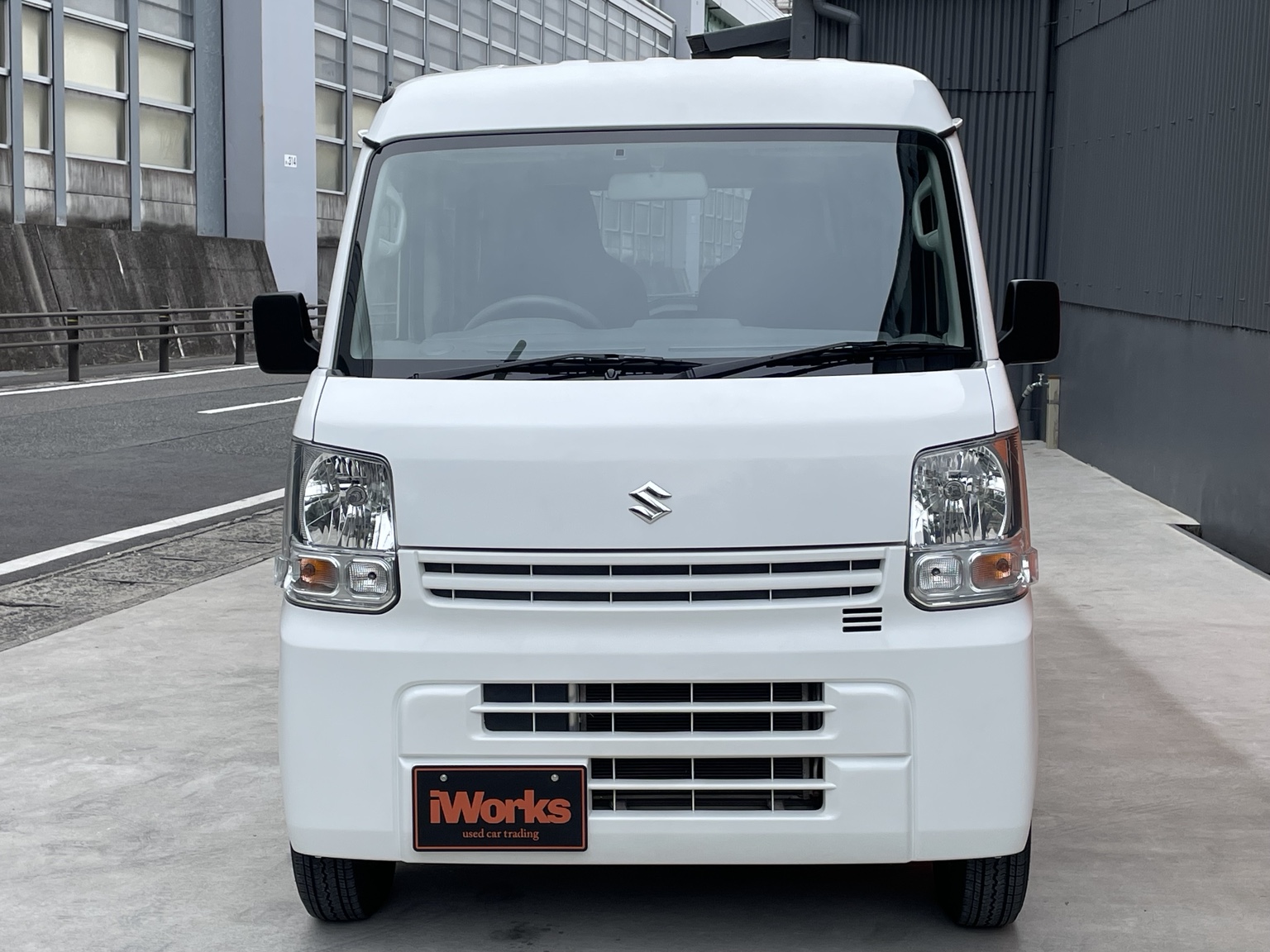
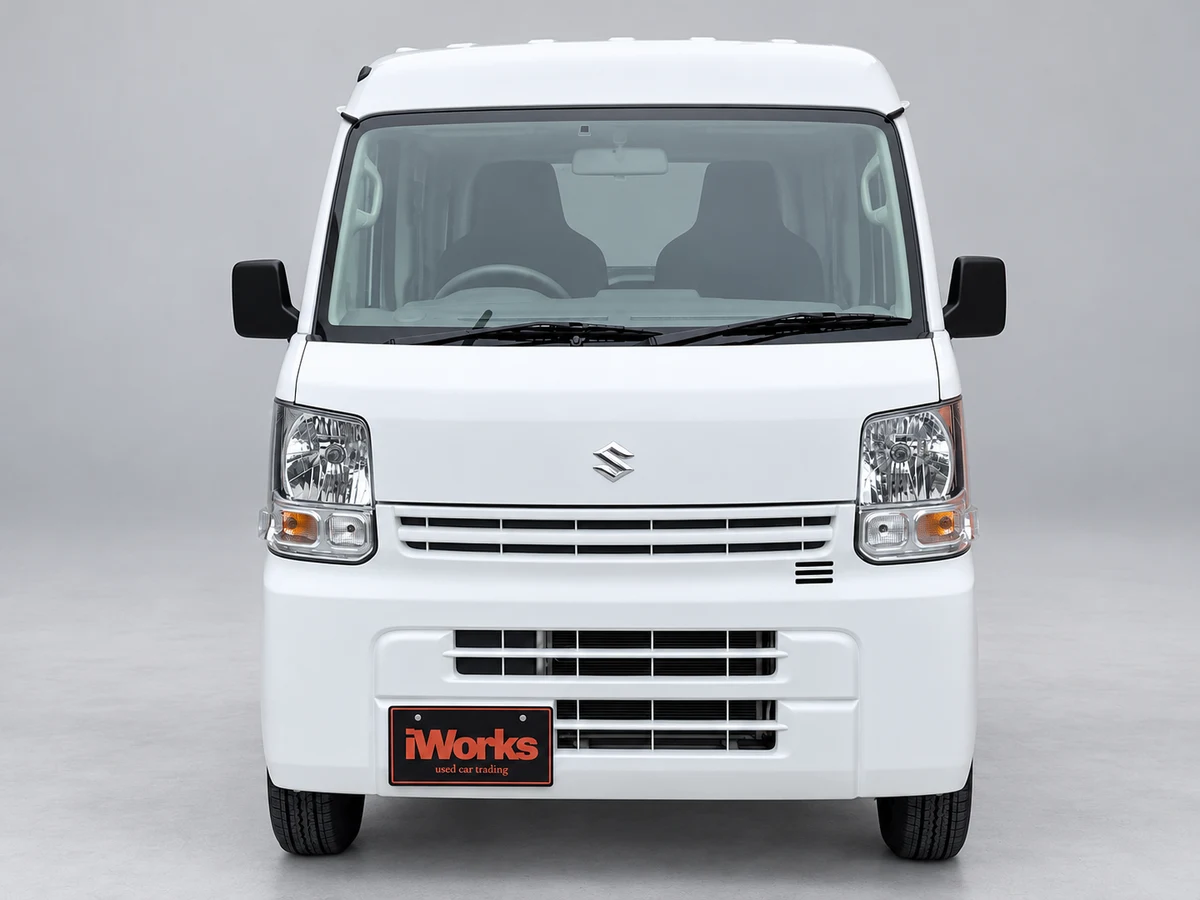
Vehicle examples with edited backgrounds. Check the individual listing or ask iWorks for the actual model year, equipment and current availability.
iWorks REAL CAR GUIDE
Every: exterior and cargo photographs.
How many people will travel? What will you carry?
Compare the same seat arrangements to find the space you need.
Camera positions and angles differ. Do not judge dimensions from apparent size alone. Look at floor shape, side intrusions and how the cargo area connects to the seats.
First identify the model
Below, compare its cargo area with each seat arrangement.
 Enlarge photo +
An example of a vehicle handled by iWorks
Background and brightness adjusted for presentation
View the original photograph
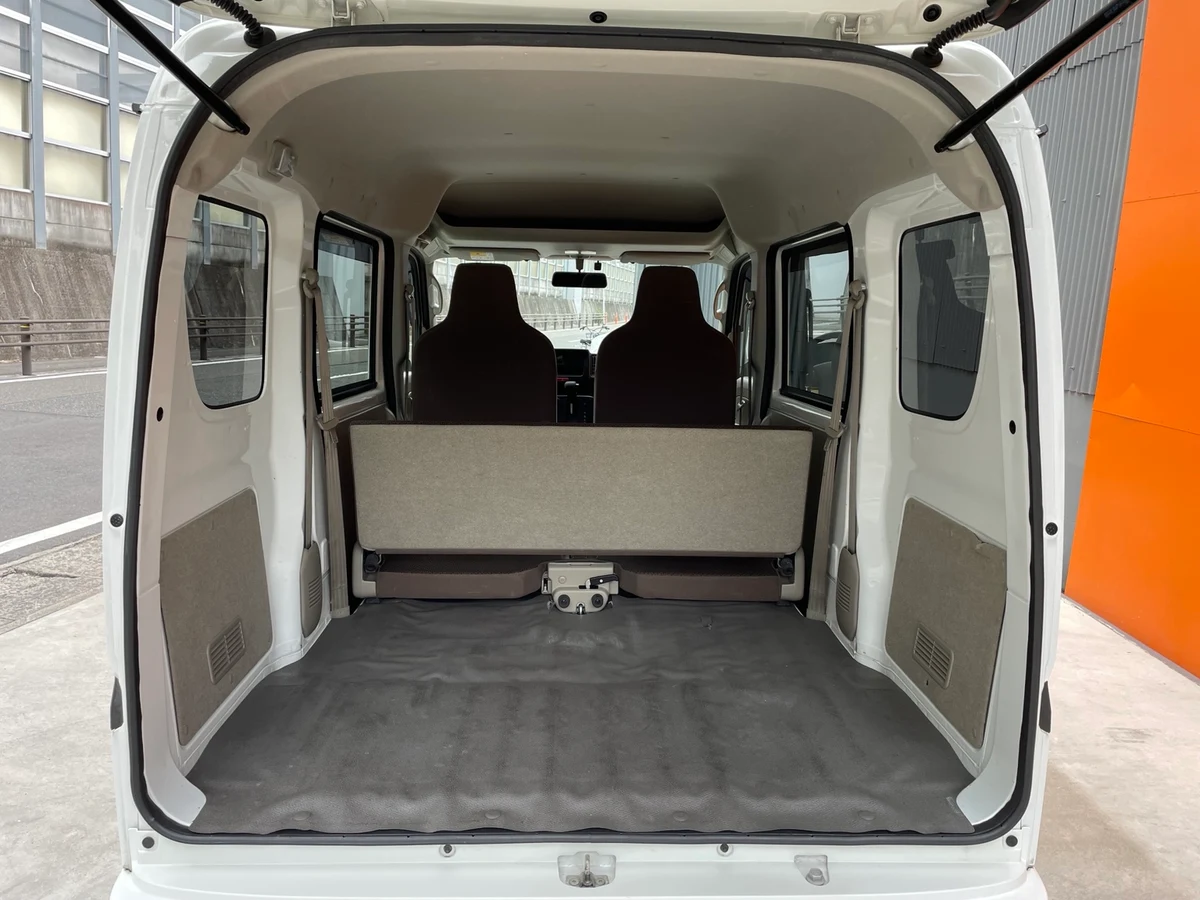
What remains with the rear seats in use?
Rear seats in use | Cargo space while carrying passengers
 Enlarge photo +
Check the depth remaining between the rear backrests and the cargo opening.
Look for the depth from the rear backrests to the cargo opening. Picture where your usual shopping bags or toolboxes would go.
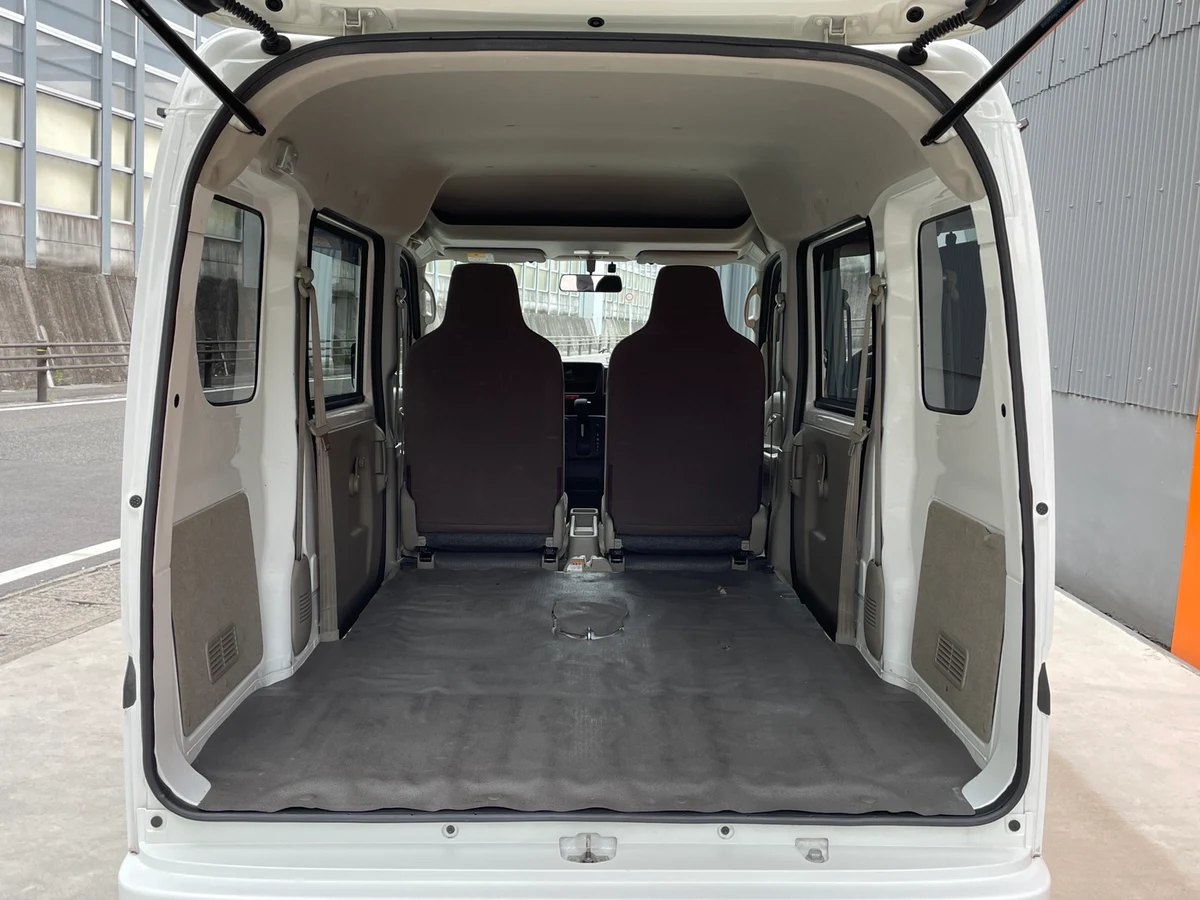
Fold the rear seats for cargo
Rear seats folded · passenger seat available | Compare with both front seats usable
 Enlarge photo +
Check the side intrusions and the floor extending to the backs of the front seats.
Look for floor width, side intrusions, steps and the usable area behind the front seats.
Check fit using your load’s actual dimensions.
Cargo space and seat-folding arrangements vary by year, grade and equipment. On the candidate vehicle, check opening width and height, floor width and depth, and any steps.
Photographs: examples of vehicles handled by iWorks; not a guarantee of current stock. Exterior images have adjusted backgrounds or brightness, and original photographs are available. Cargo images are real photographs without alterations to shape, steps or seat layout.
SIZE & SPACE
Every body and cargo dimensions in pictures
Similar body sizes do not mean identical usable cargo space. Compare common used models with their specification and seat configuration clearly stated.
Body and cargo dimensions are shown separately. Cargo widths with four occupants and maximum lengths with the front passenger seat folded are not mixed into this comparison. Figures are published by the manufacturers, not measured by iWorks.
DA17V
Every
PC / high roof / 2WD
February 2015 launch specification
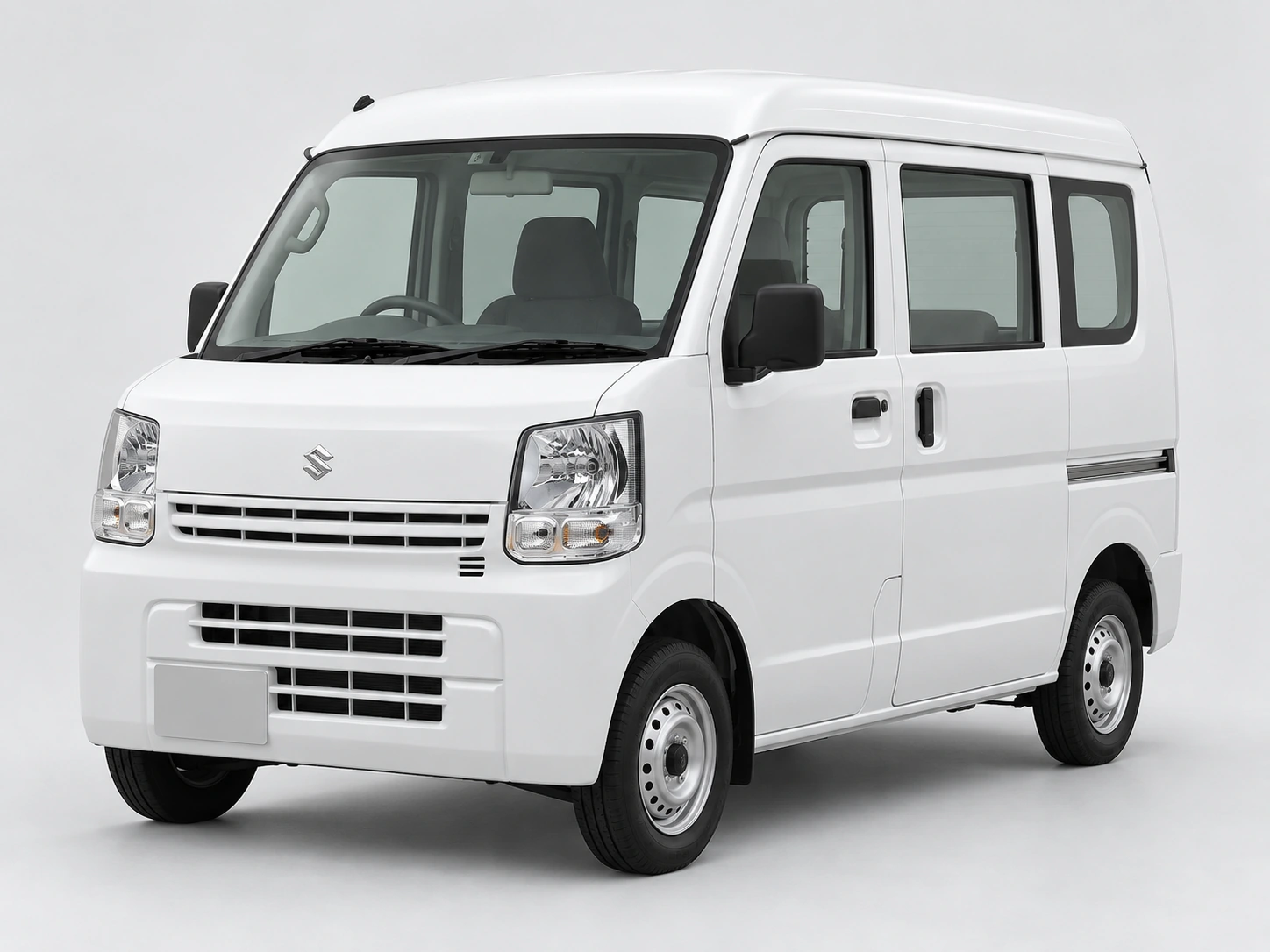
Original photographed 13 March 2015. Photograph:Tokumeigakarinoaoshima / Wikimedia Commons original / CC0 1.0. Background, framing and lighting adjusted with AI; display items and signs removed. Use the tables and diagrams for dimensions.
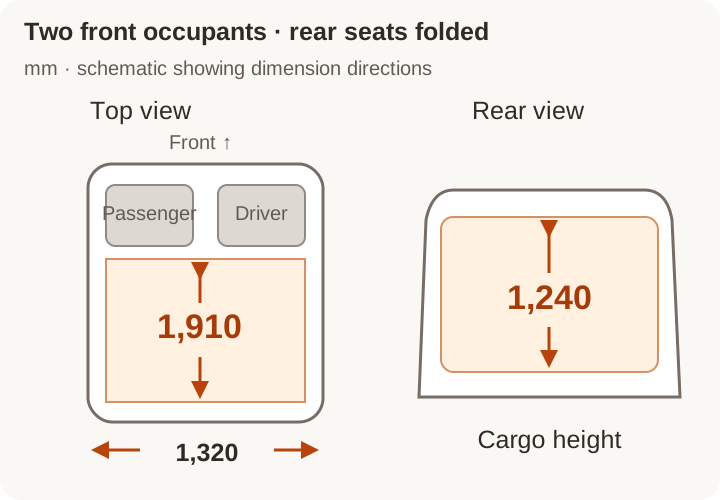
Cargo dimensions: two front occupants, rear seats folded / mm
- Cargo length
- 1,910
- Cargo width
- 1,320
- Cargo height
- 1,240
Body length × width × height:3,395 × 1,475 × 1,895 mm
For carrying cargo with two people, use the 1,910 mm cargo length as an initial guide to arranging boxes and tools.
These figures are for the PC at its 2015 launch. The JOIN of the same year has a cargo length of 1,820 mm and width of 1,280 mm. Rear seats also changed on later PC models, so the DA17V model code alone does not establish identical dimensions.
The 1,385 mm cargo-width figure is for four-person use. Here, the shared condition is two front occupants and rear seats folded, with a width of 1,320 mm.
Dimension sources (Japanese):Suzuki: Every specifications, February 2015
Suzuki: PC / PA rear-seat improvements, May 2017
Cargo length, width and height are measurements in each direction from the specification sheet. The same width and height are not available everywhere, and measurement points differ between models. Check floor length, openings and the narrowest points separately.
Sources and images checked: 28 October 2026. Exterior images illustrate the models. Manufacturer photographs and dimension drawings have not been reproduced; the explanatory diagrams were created from published figures. Archived copies of the original manufacturer PDFs were also used for older specifications.